Stop顿
/PROJECT_INFO
/OVERVIEW
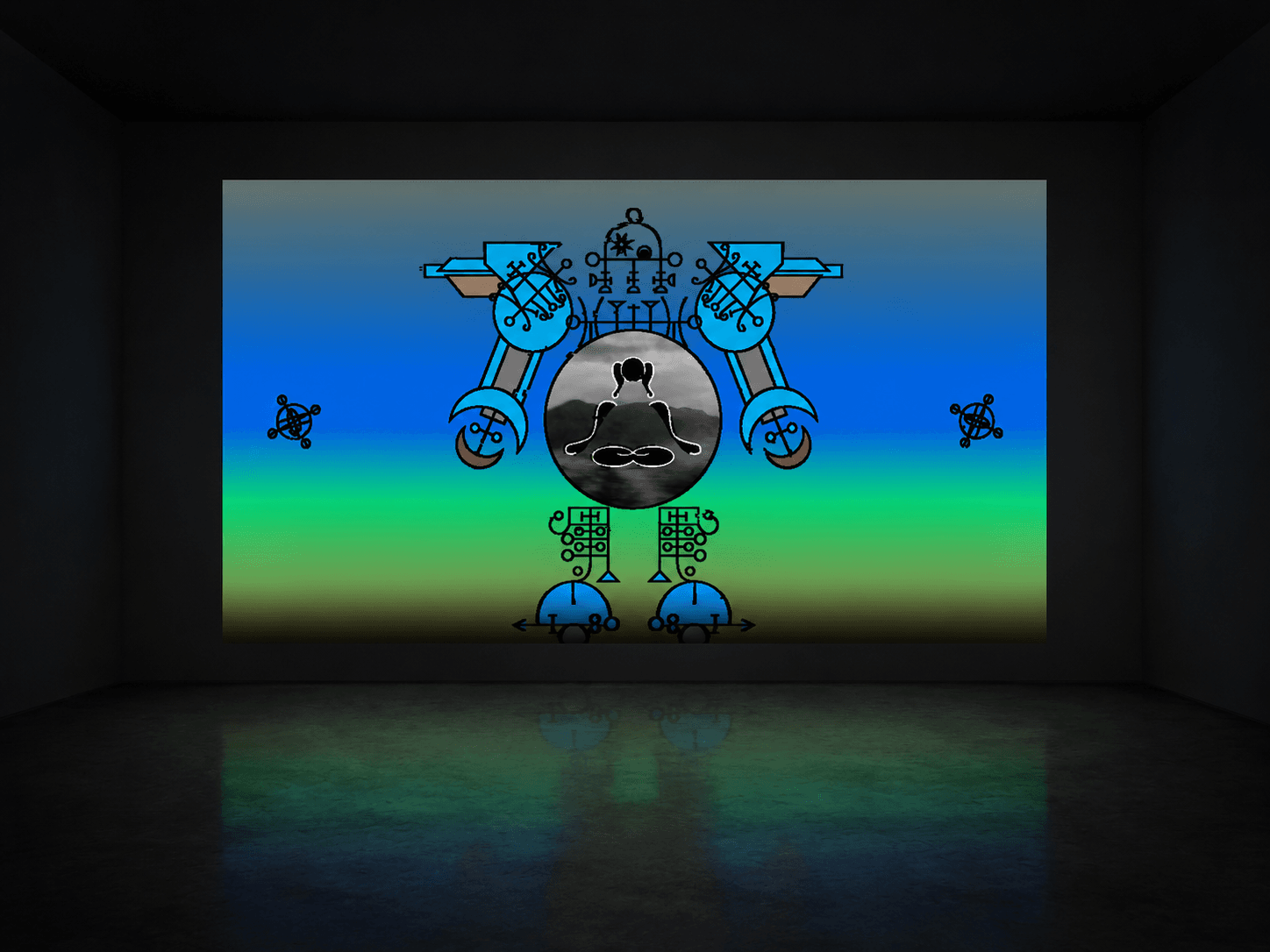
STOP is an animation with sound in which Bai deliberately merges bodily structures—blood vessels, meridian-like channels, and neural pathways—with mechanical parts, electronic circuits, and esoteric symbols to form continuously changing robots. A meditating figure remains at the centre of each structure, placing inward attention within a system that appears simultaneously bodily, mechanical, and electronic.
/FULL_PROJECT_TEXT
Bai divides, moves, and reconnects his existing symbols to assemble a sequence of robotic forms. The resemblance between mechanical lines and bodily structures is intentional rather than incidental: blood vessels, meridian-like channels, and neural pathways are mixed with machinery, circuitry, and electronic traces so that the body’s interior is imagined as a system of transmission, connection, and operation.
A meditating human figure remains at the centre of each robot. The body extends Bai’s interest in internal activity during meditation while connecting it to his childhood fascination with Japanese animation, robots, retro science fiction, and electronic technology in Shenzhen. Earlier mechanical fantasies and later inward experience occupy the same structure.
The Chinese title, Dun, carries associations of pausing and sudden awakening. Outer structures keep transforming while the central body remains relatively stable. The tension lies not only between movement and stillness, but in the deliberate overlap of body and machine, meridians and circuitry, inward experience and electronic imagination.
/OVERVIEW
《顿》是一部有声动画。柏志威把人体内部的血管、经脉与神经式线路,有意识地同机械部件和电子回路混合,再与神秘符号共同组合成不断变形的机器人。每个结构中央保留禅修的人形,使“向内”的冥想状态被放进一个同时像身体、机器和电路的系统中。
/FULL_PROJECT_TEXT
柏志威将此前发展的符号拆分、移动和重新连接,组合成多种机器人形态。机械线条并非只是在视觉上偶然像人体结构:他有意把血管、经脉、神经通路与机械、电路和电子线路混在一起,让身体内部被想象成一个可以传导、连接和运行的系统。
每个机器人中央都保留一个禅修的人形。这个身体延续了他对冥想时内部活动的想象,也连接着在深圳成长时对日本动画、机器人、复古科幻与电子技术的兴趣。童年的机械想象与成年后的内观经验由此进入同一个结构。
中文标题“顿”同时带有停顿与顿悟的含义。外围结构持续变形,中央身体保持相对稳定;真正的张力不只来自动与静,也来自身体与机器、经脉与电路、内在经验与电子想象被有意叠合在一起。