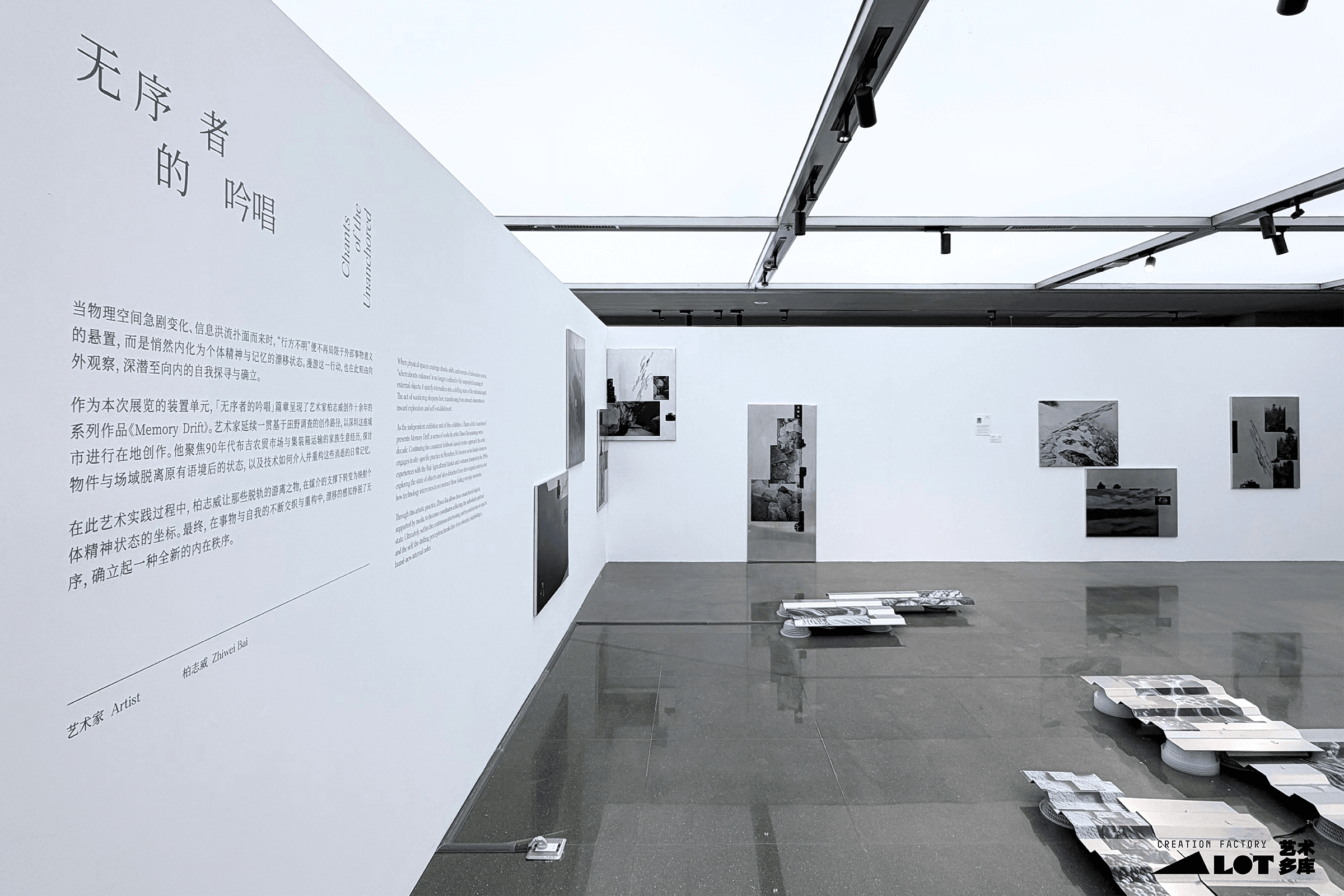
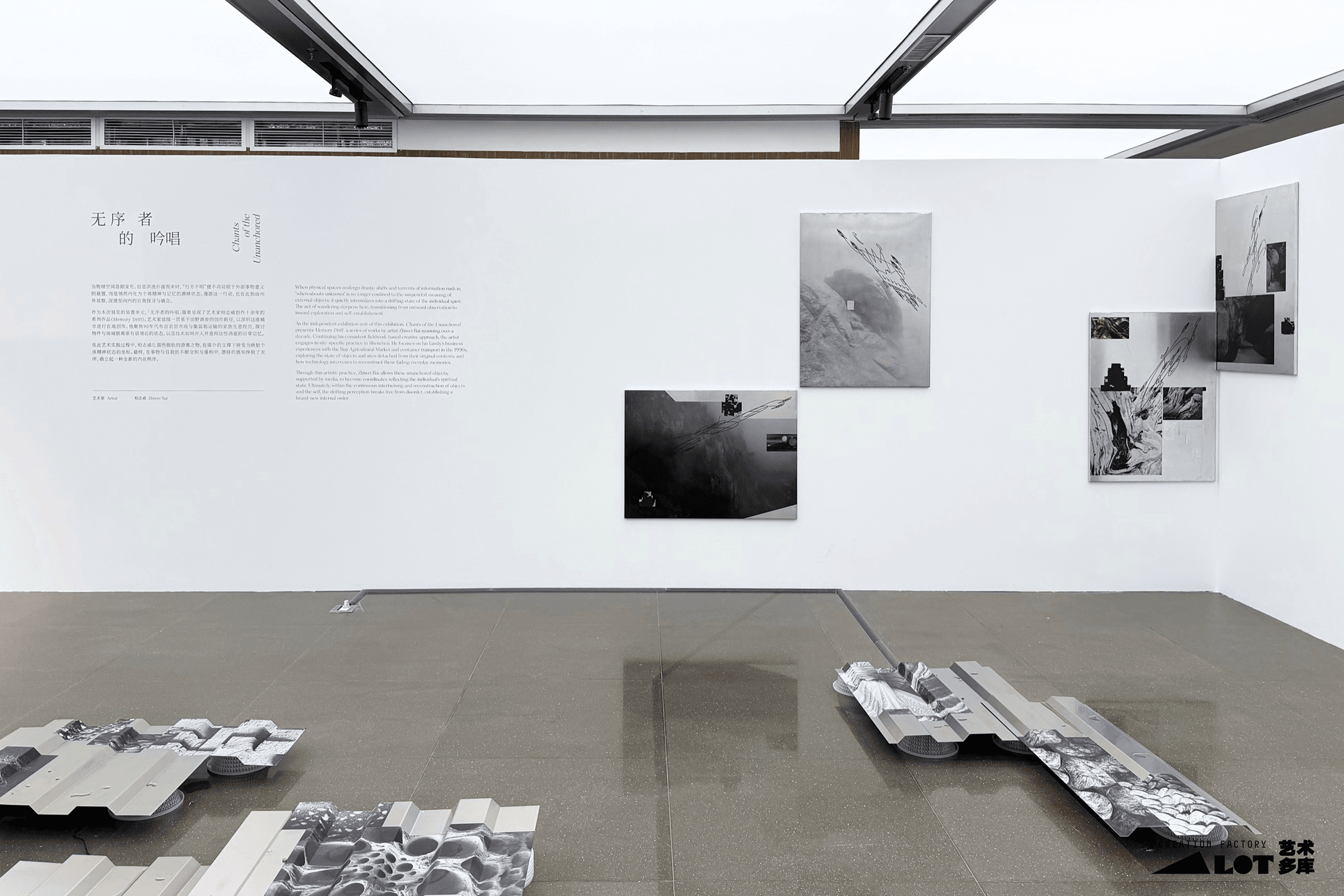
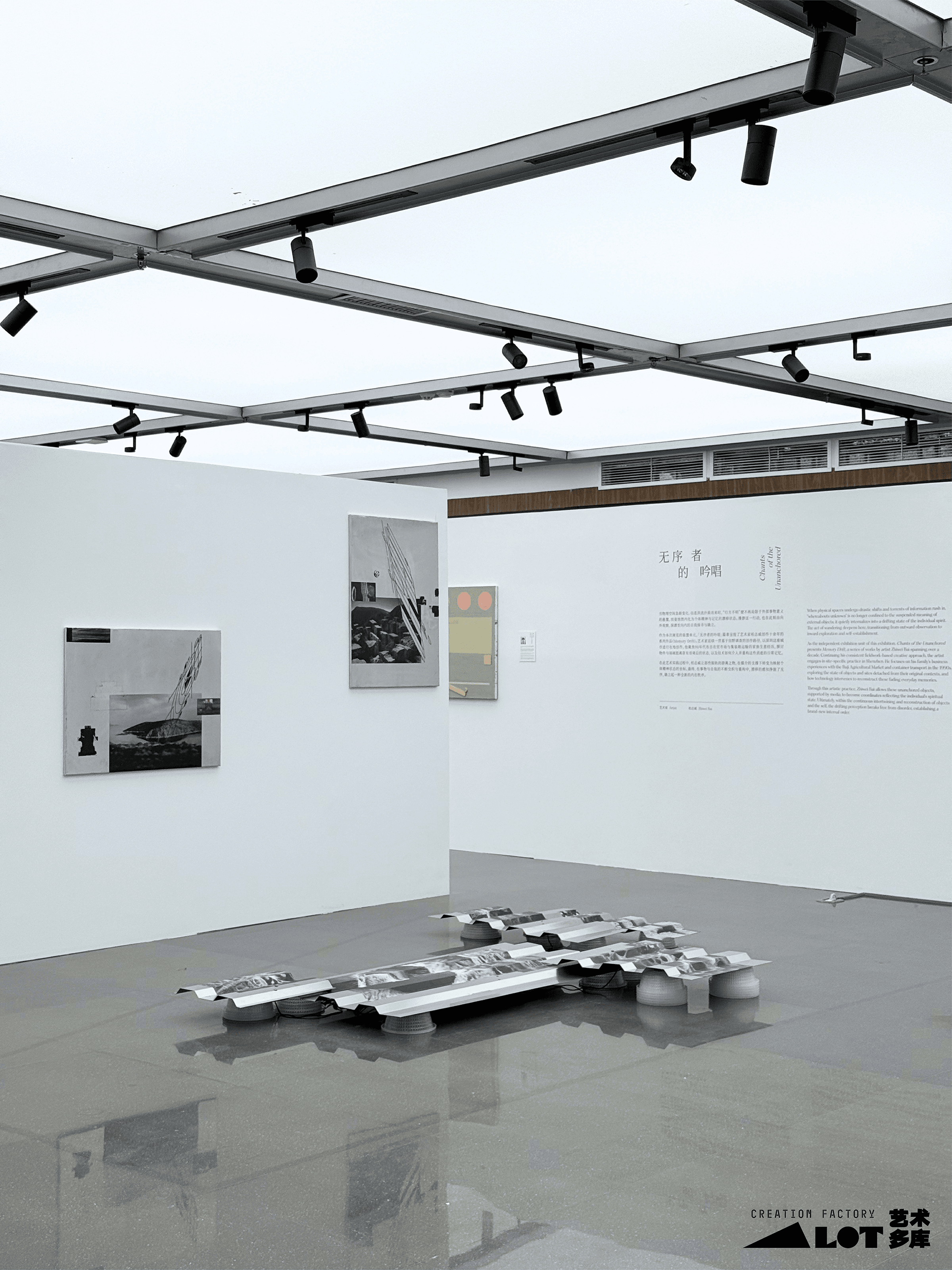
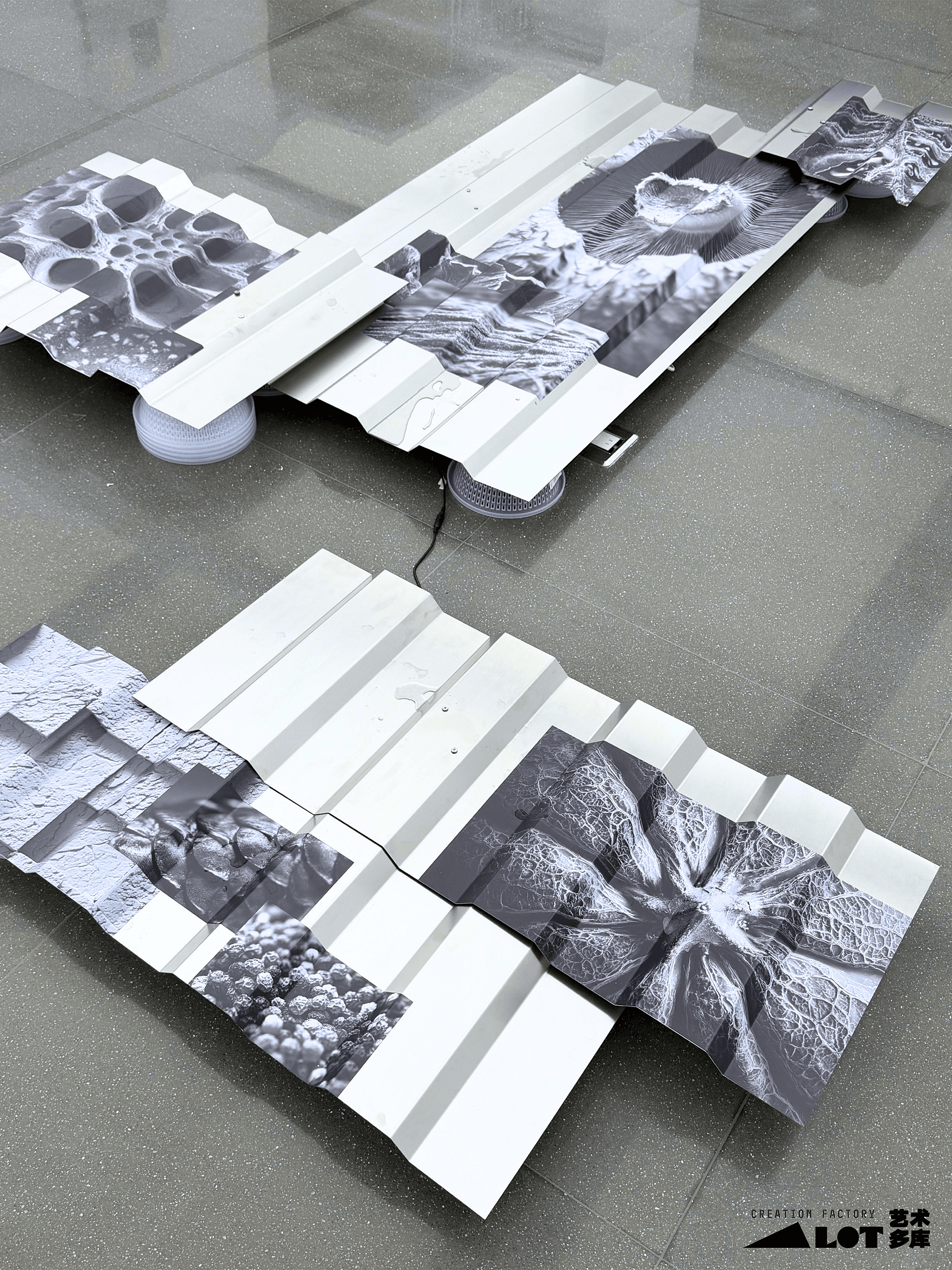
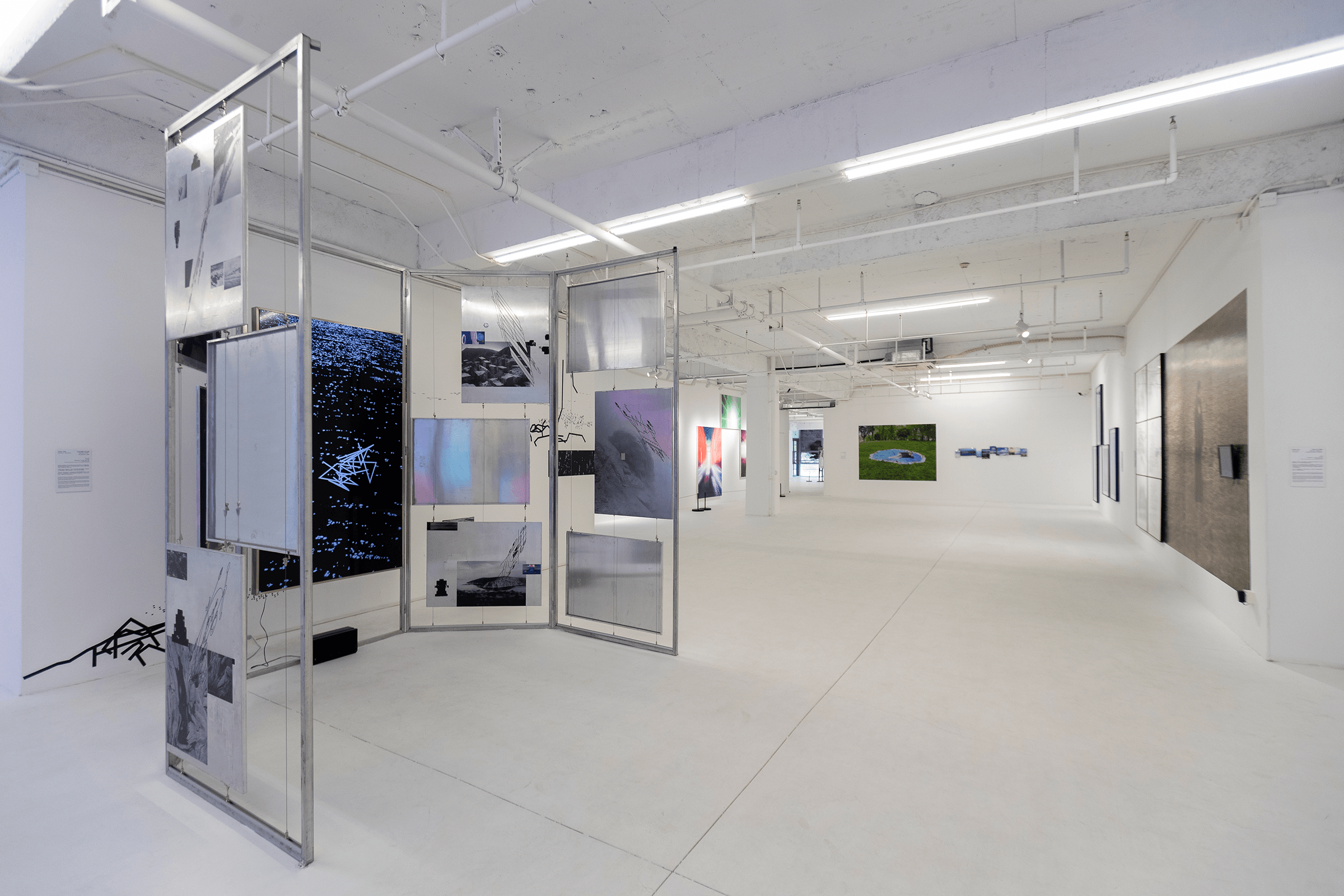
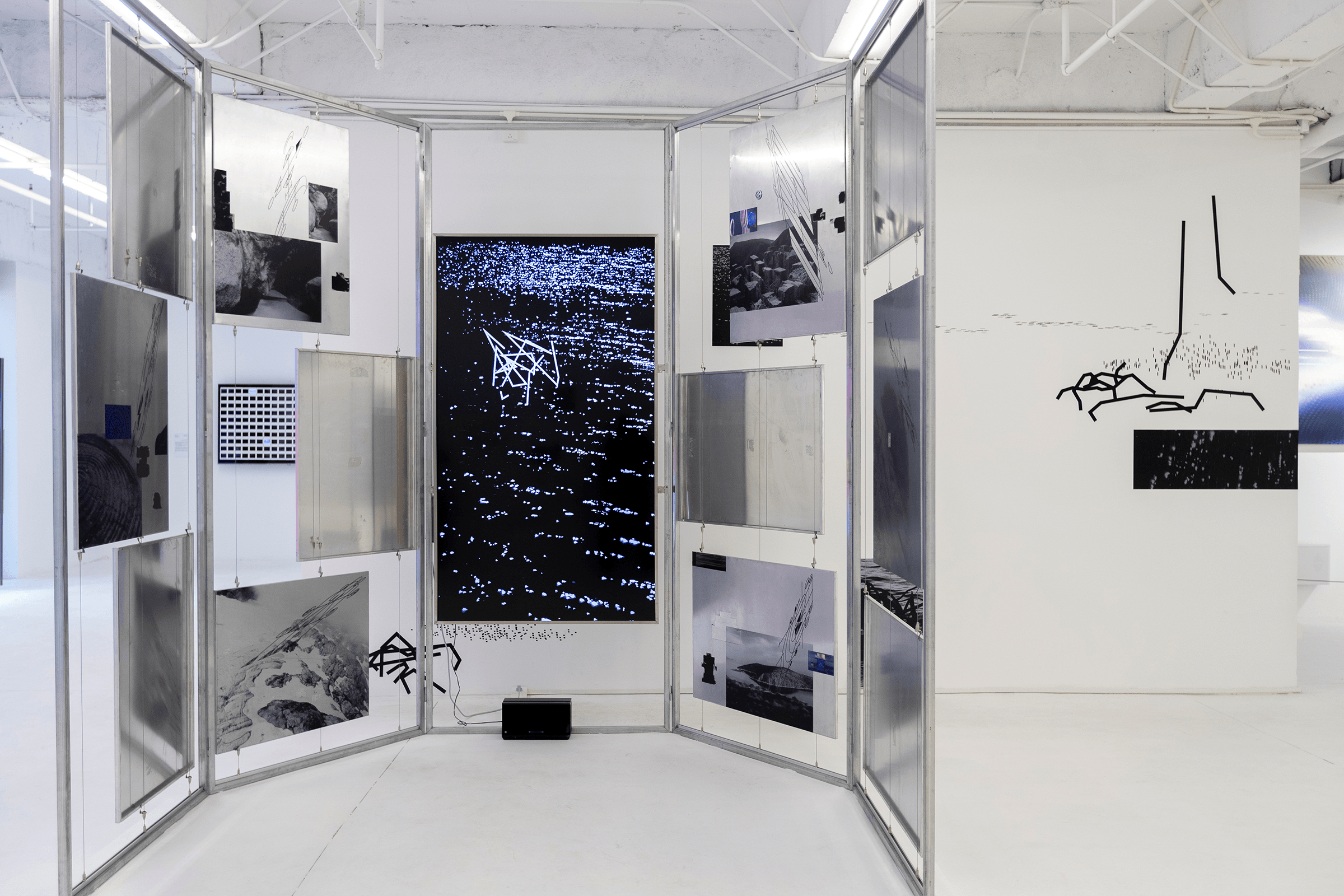
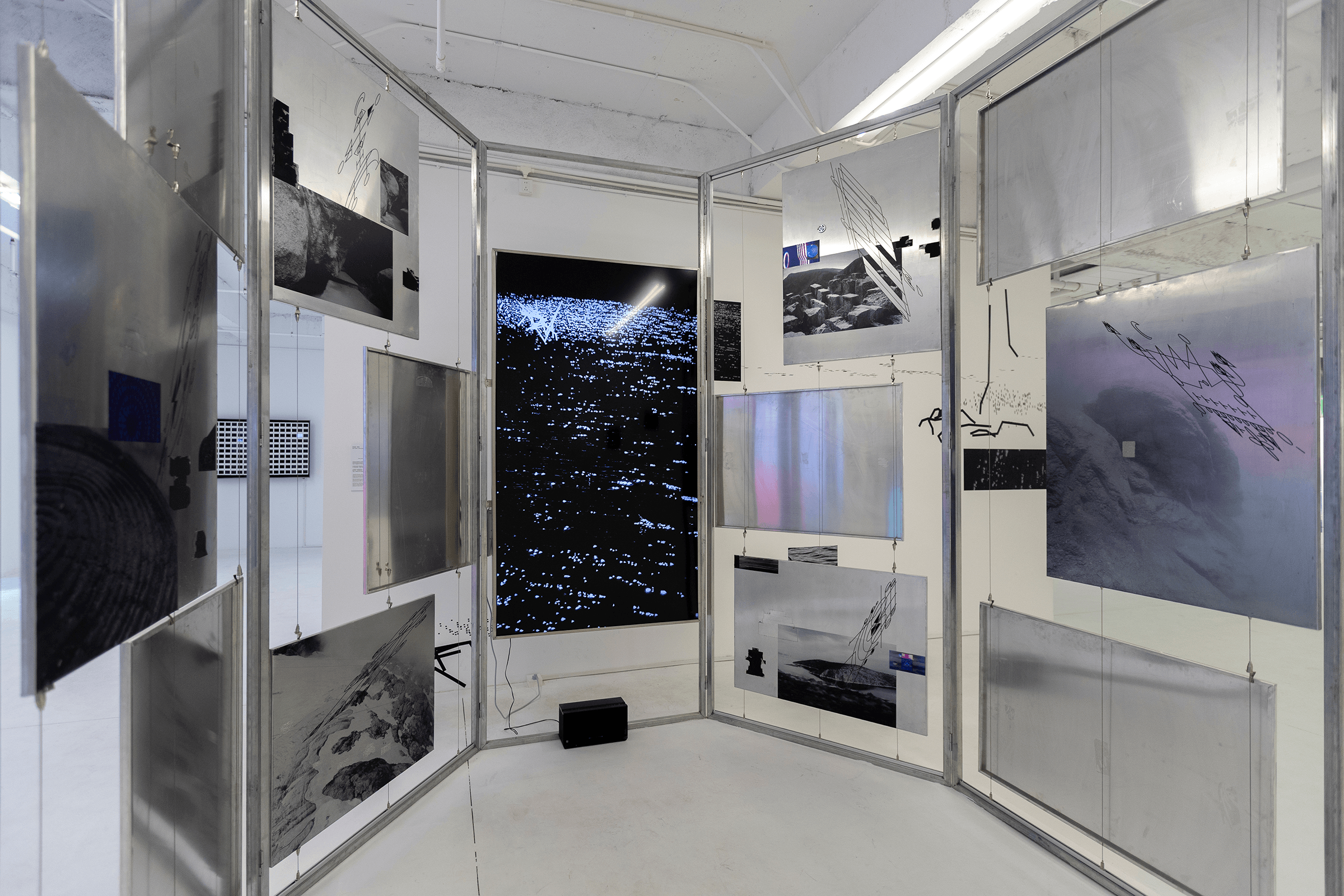
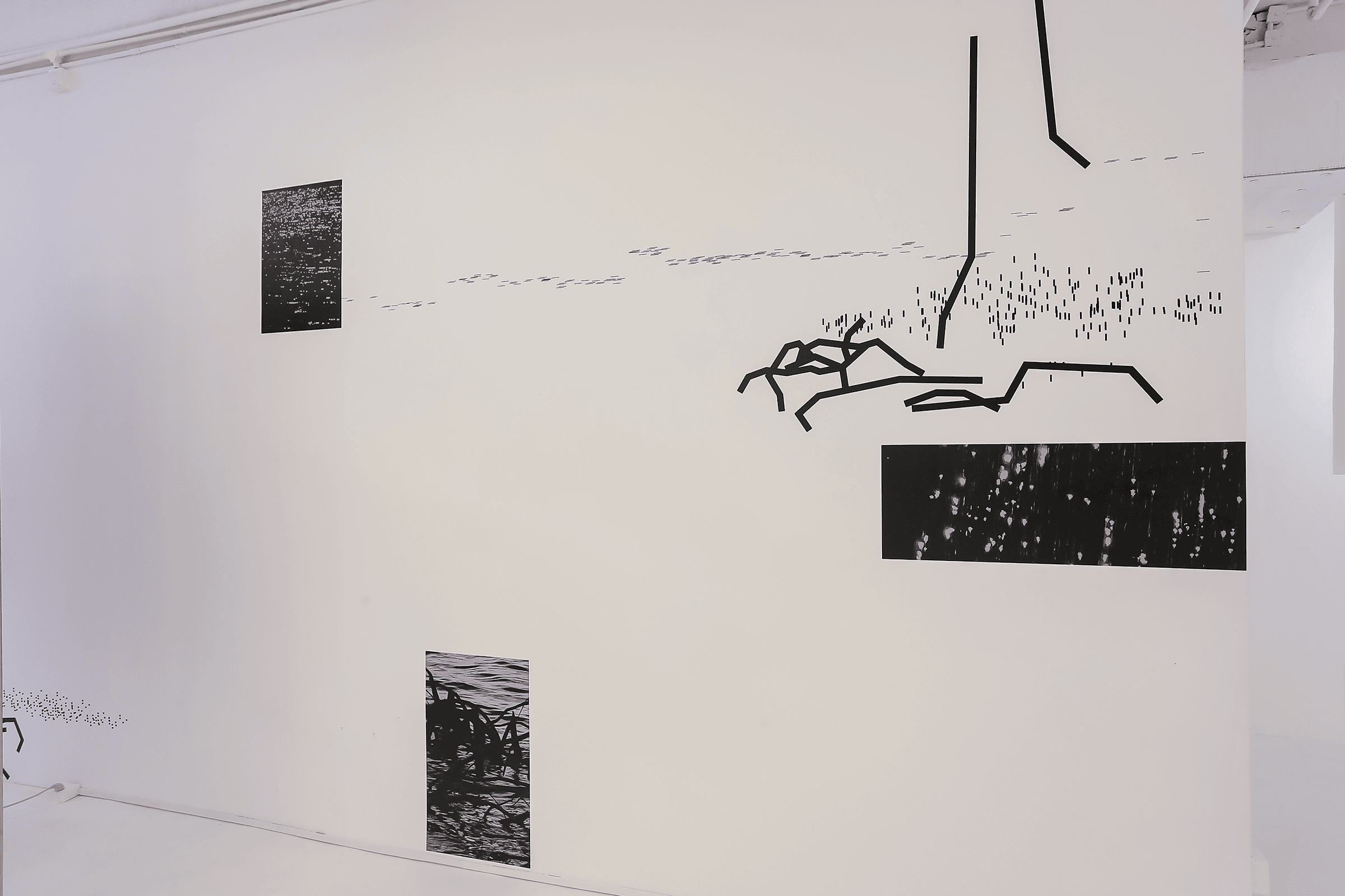
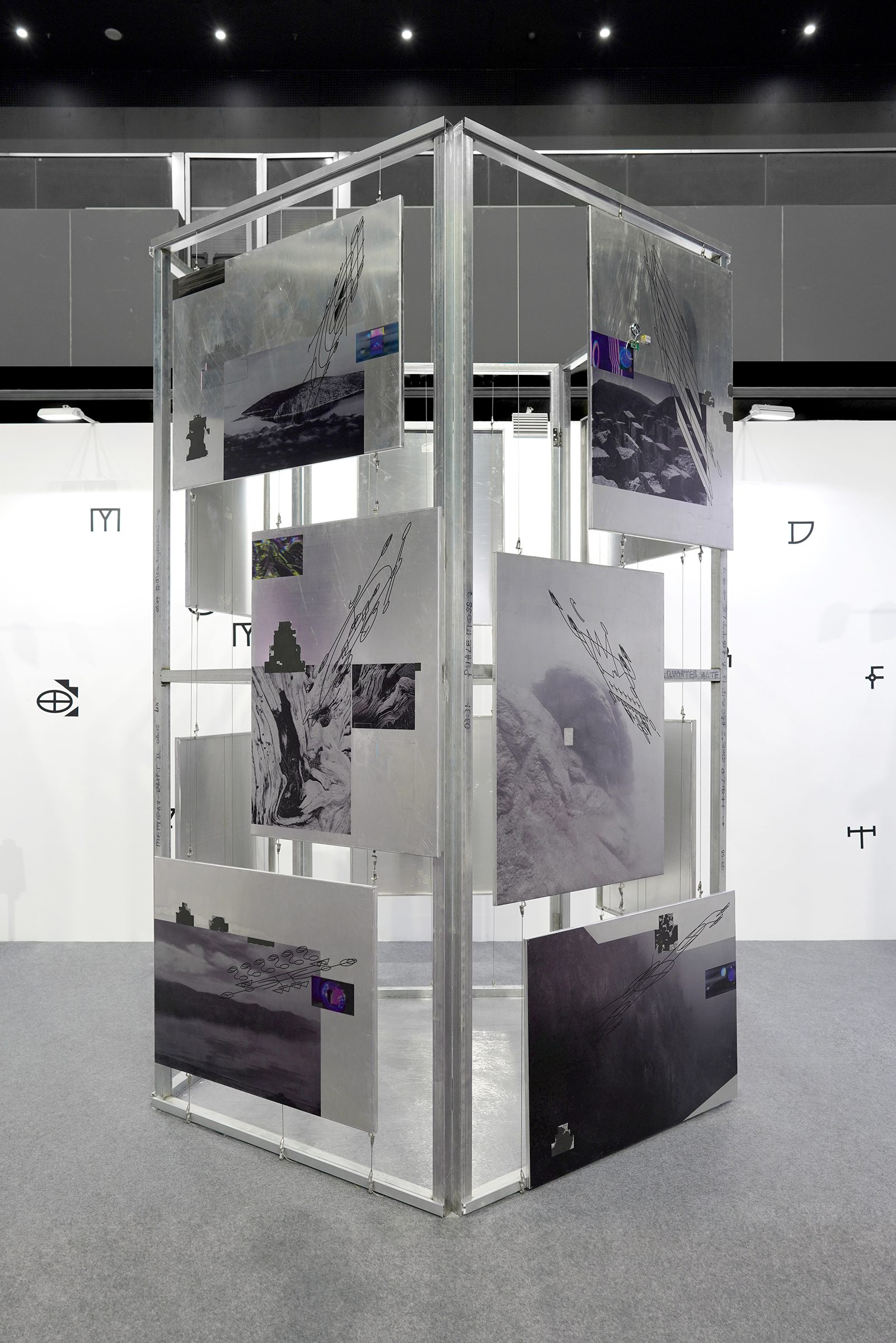
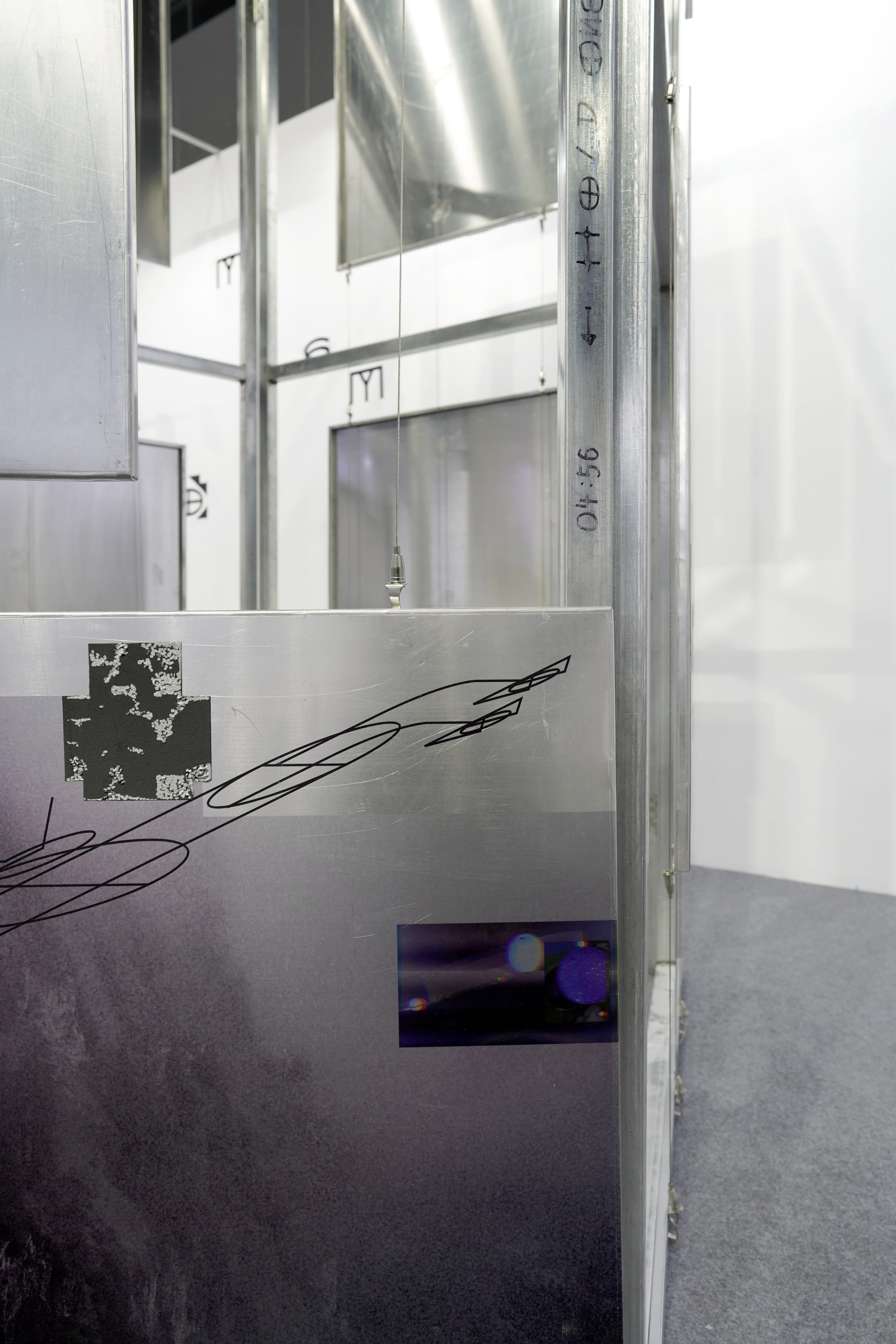
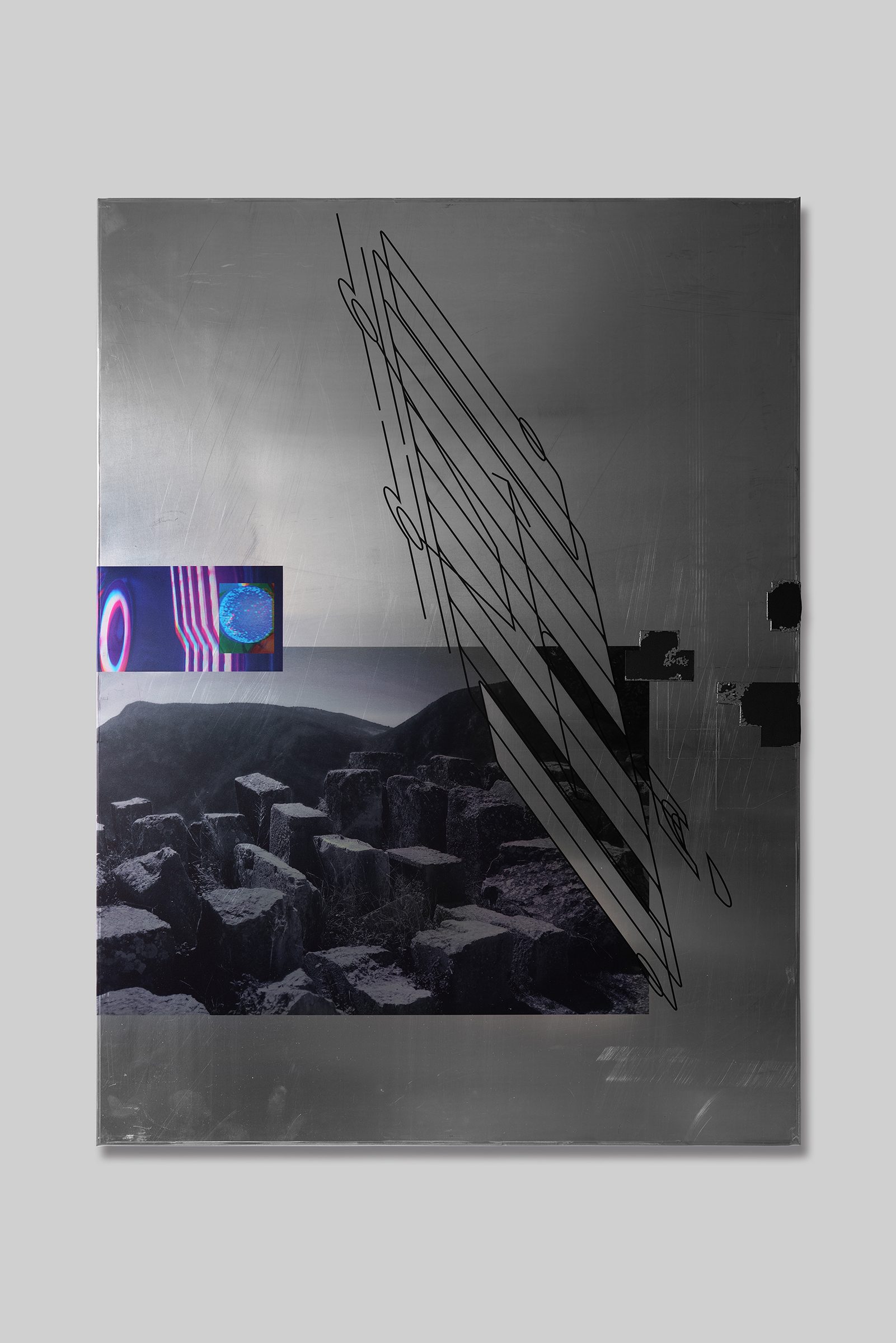
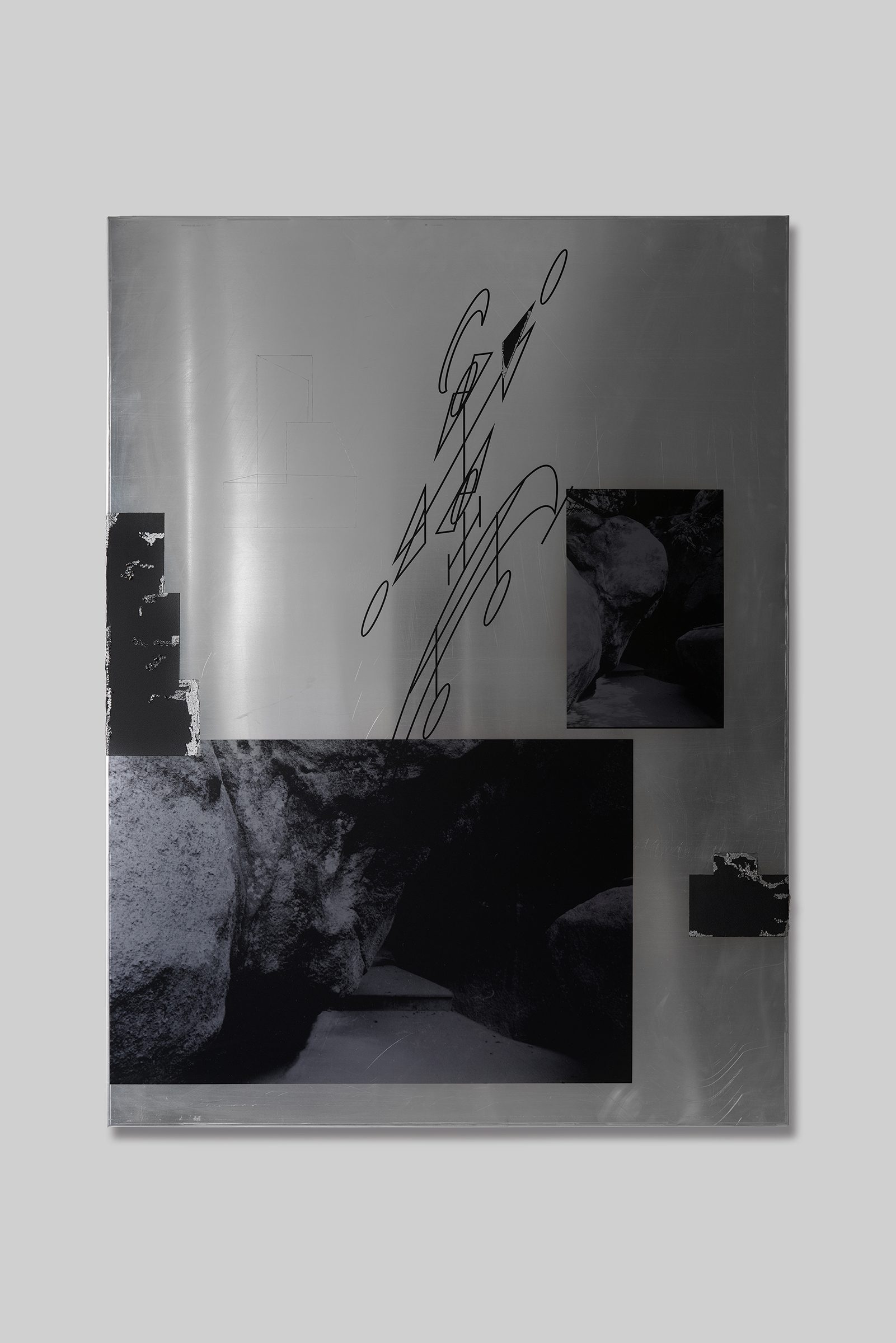
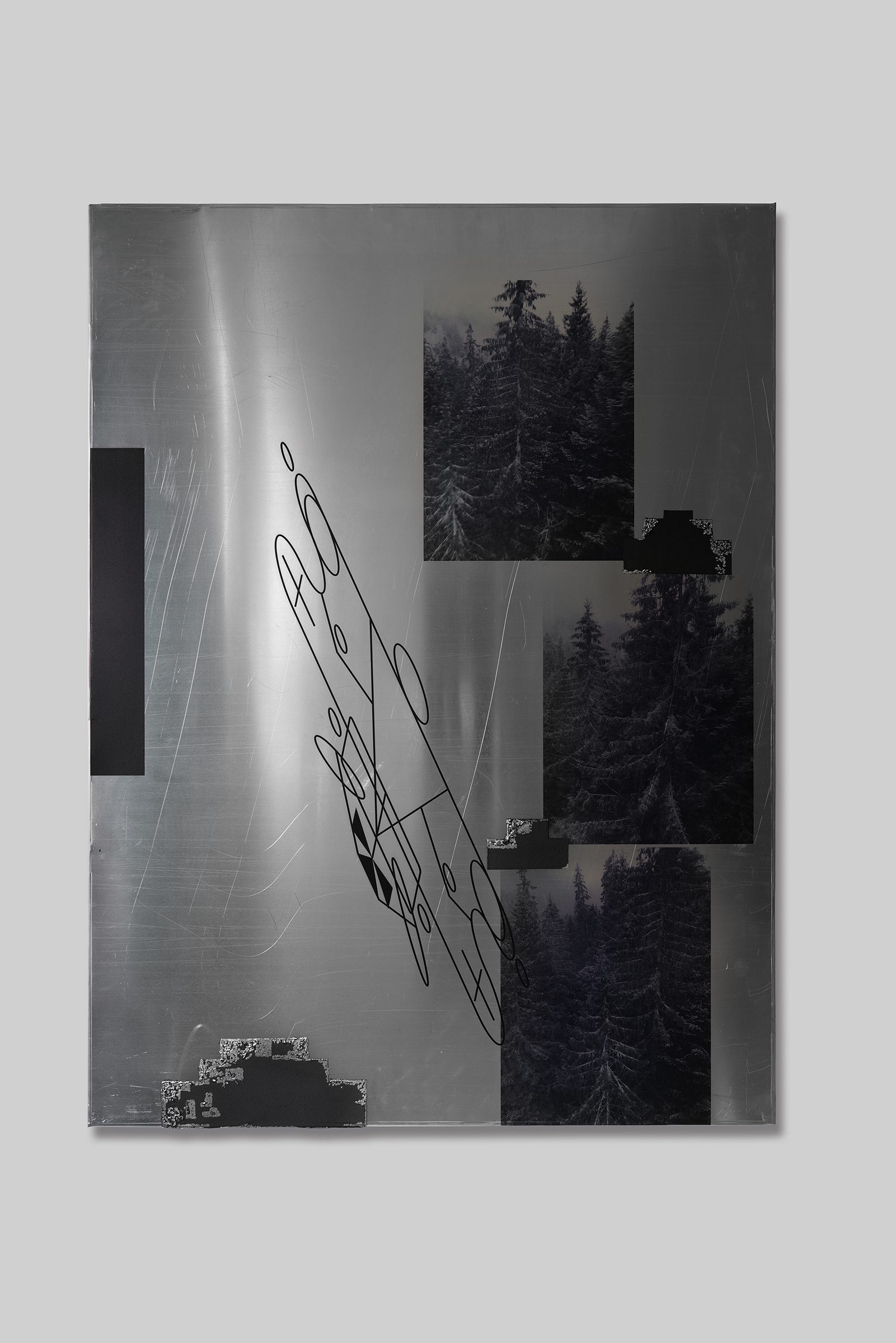
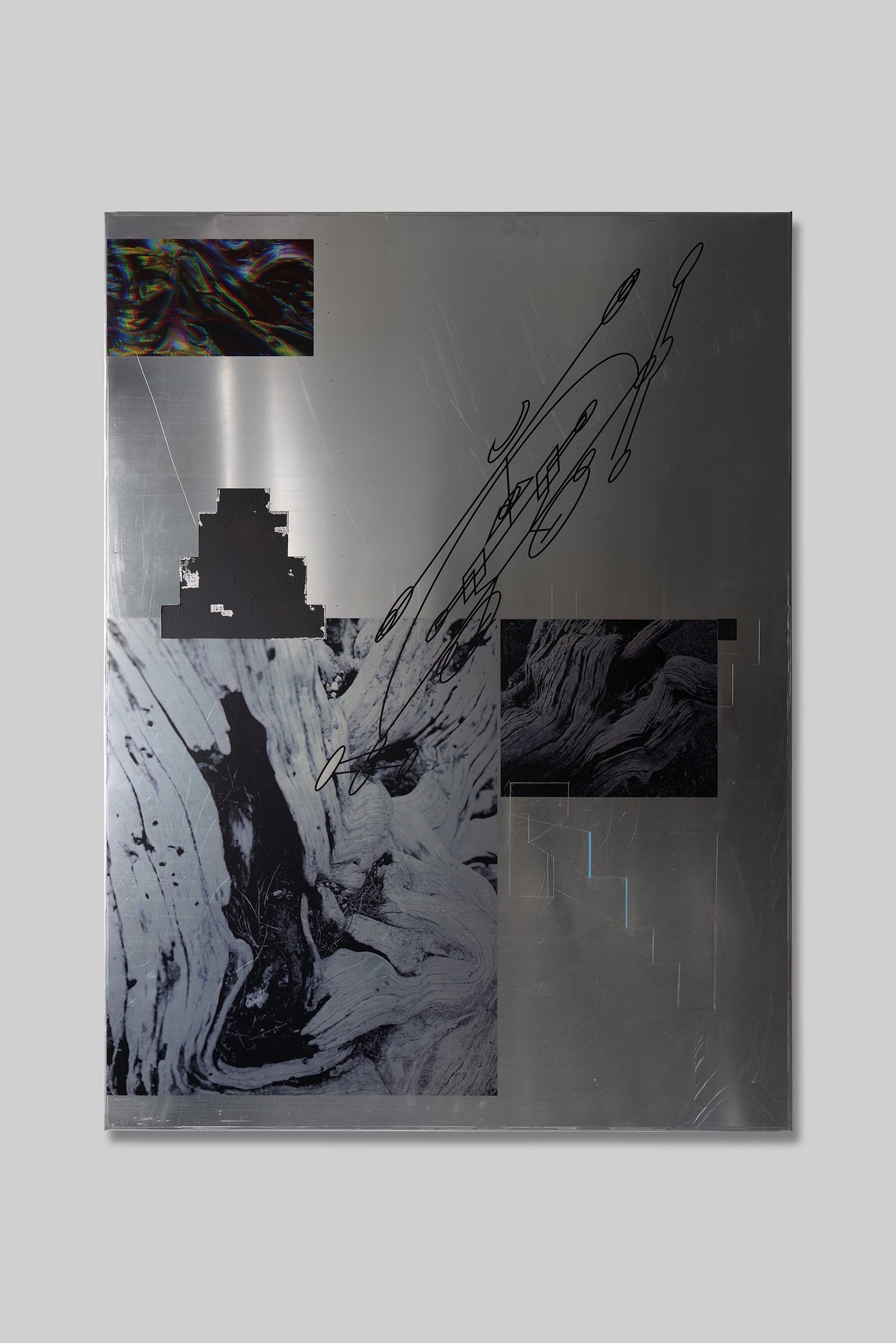
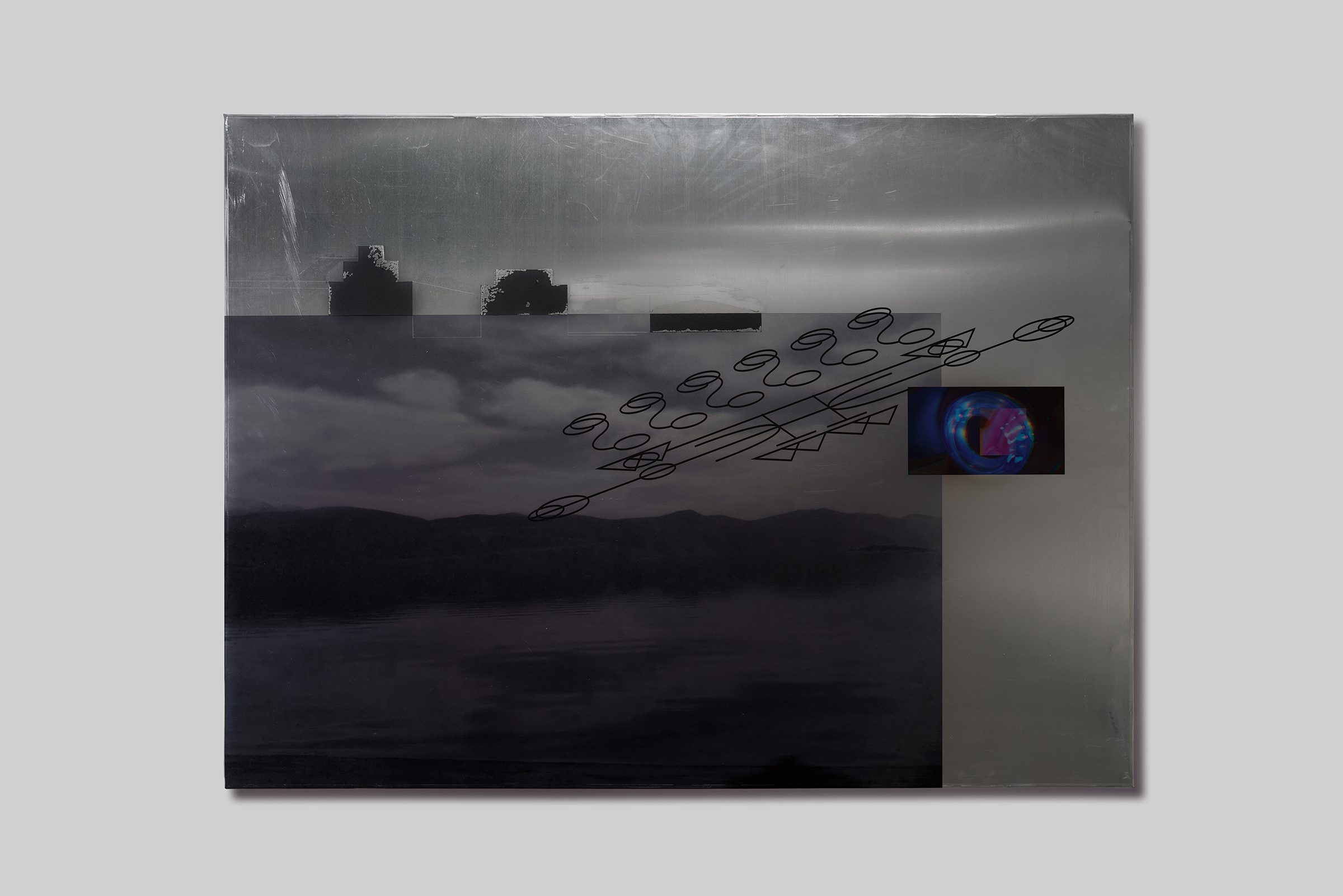
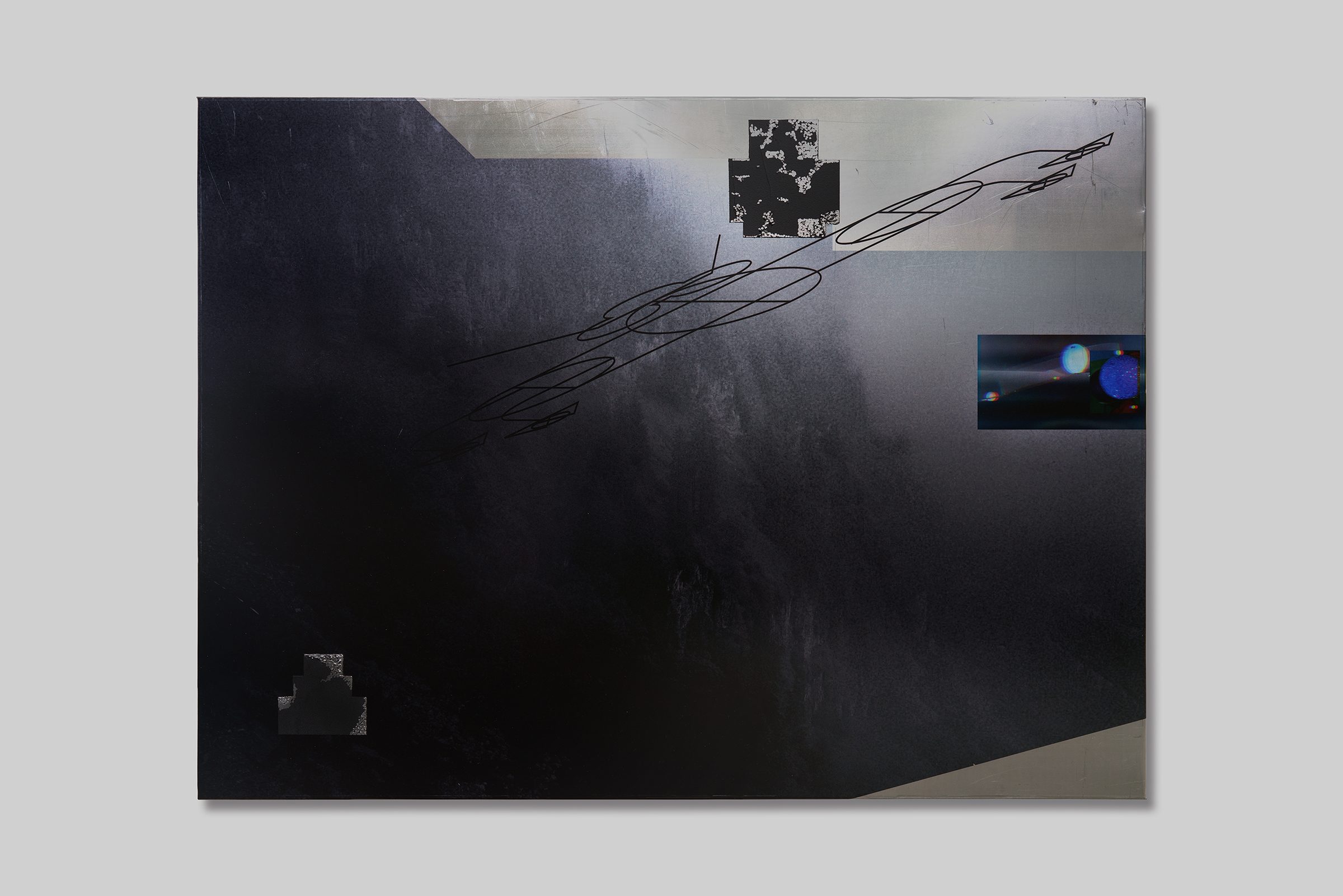
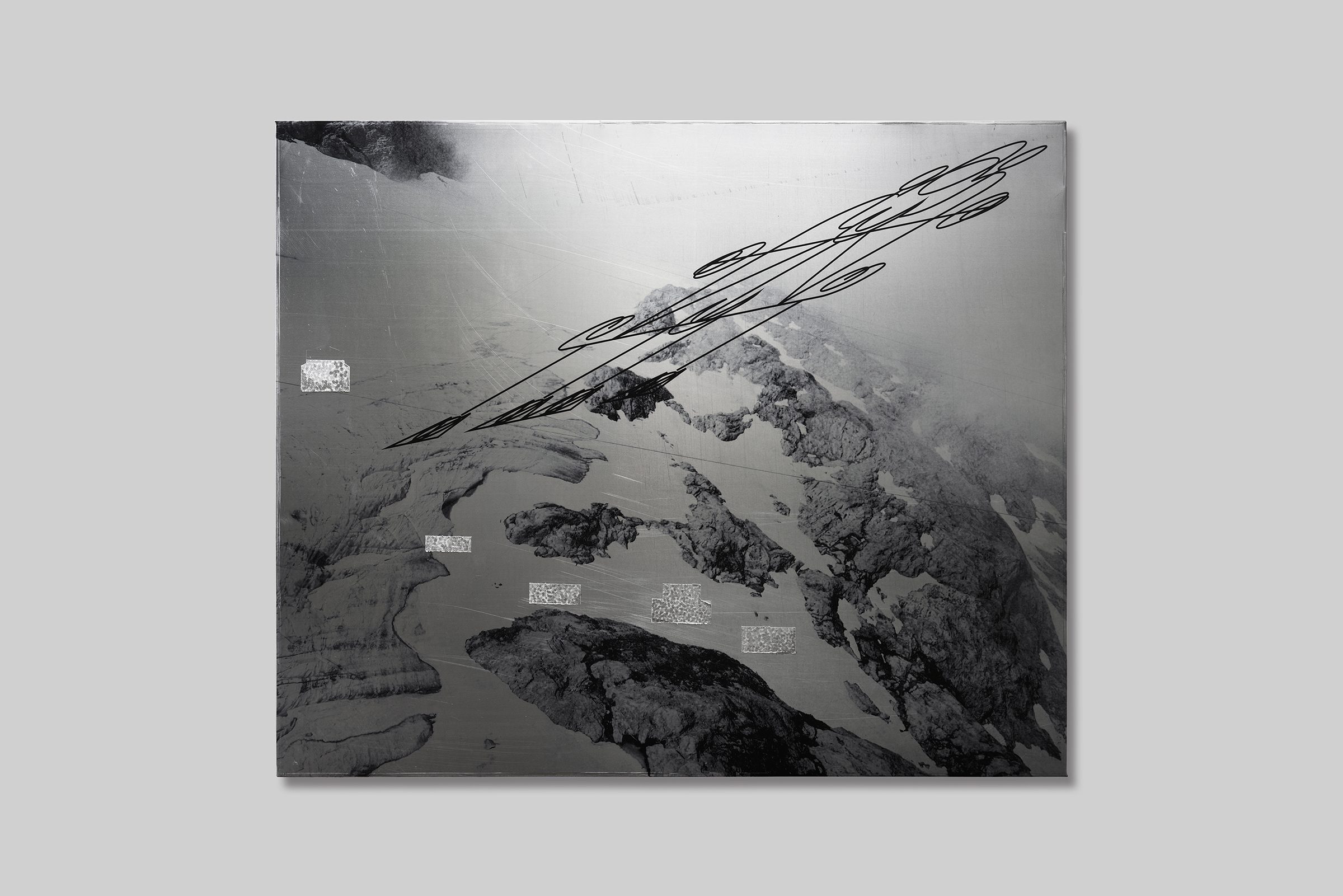
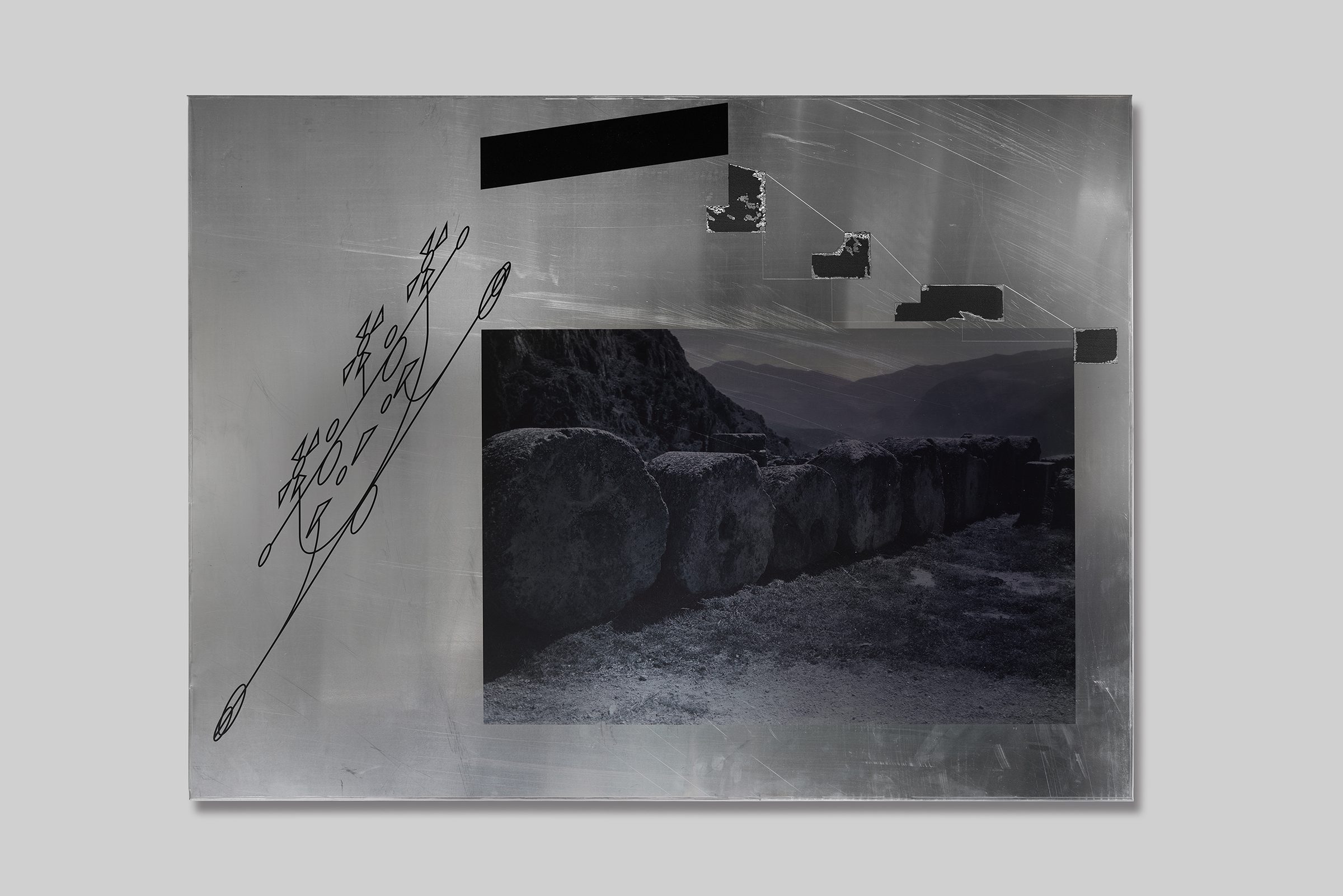
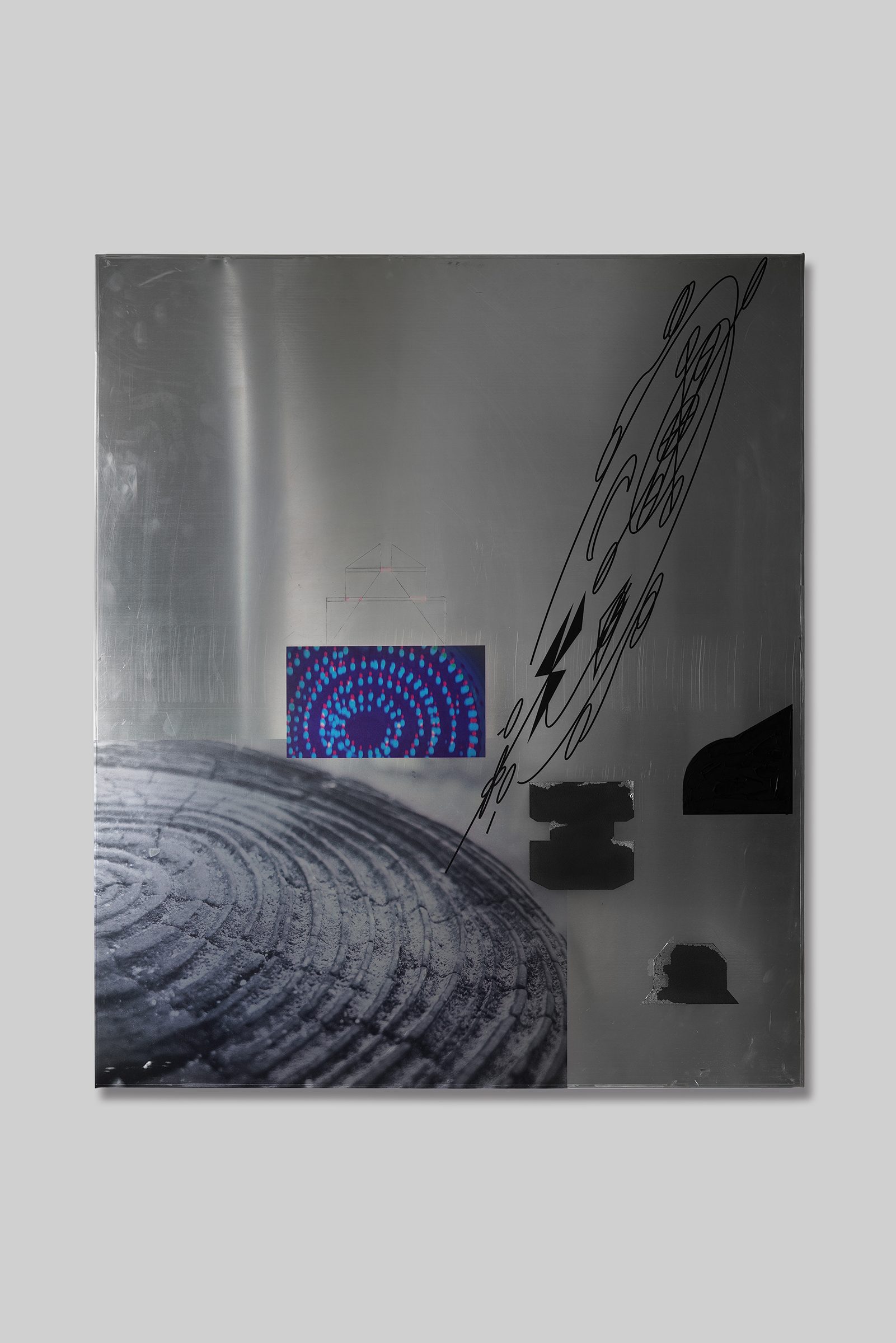
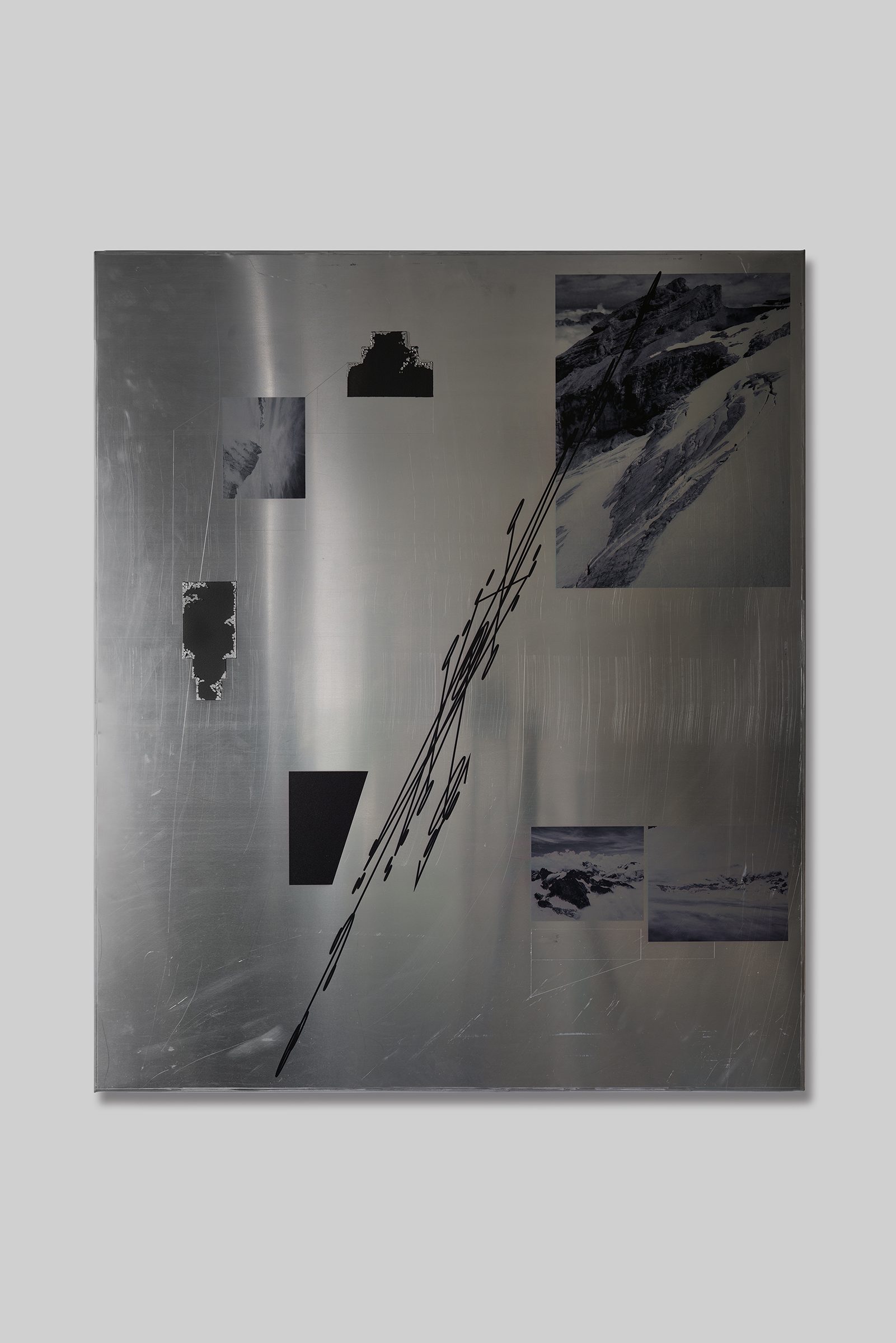
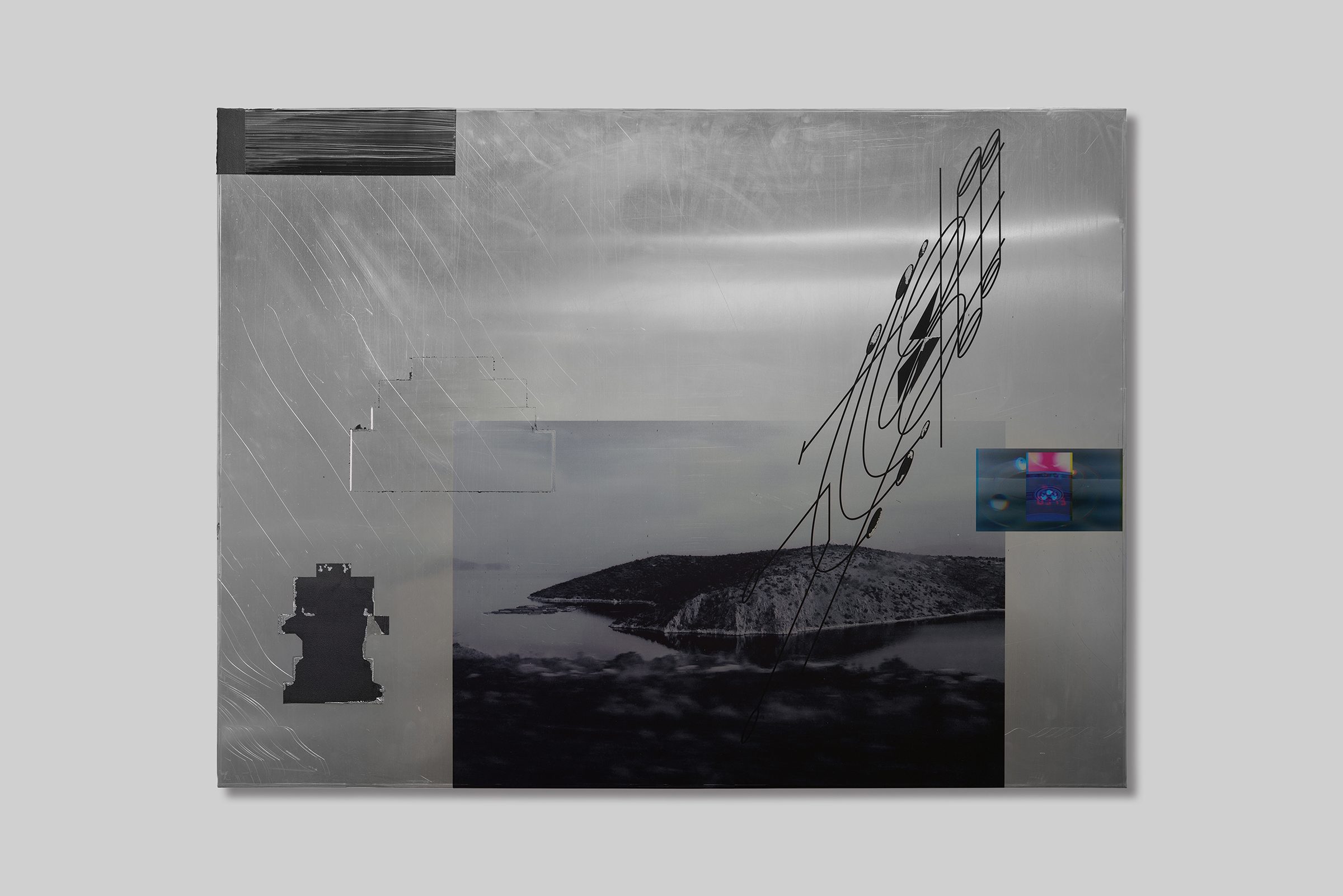
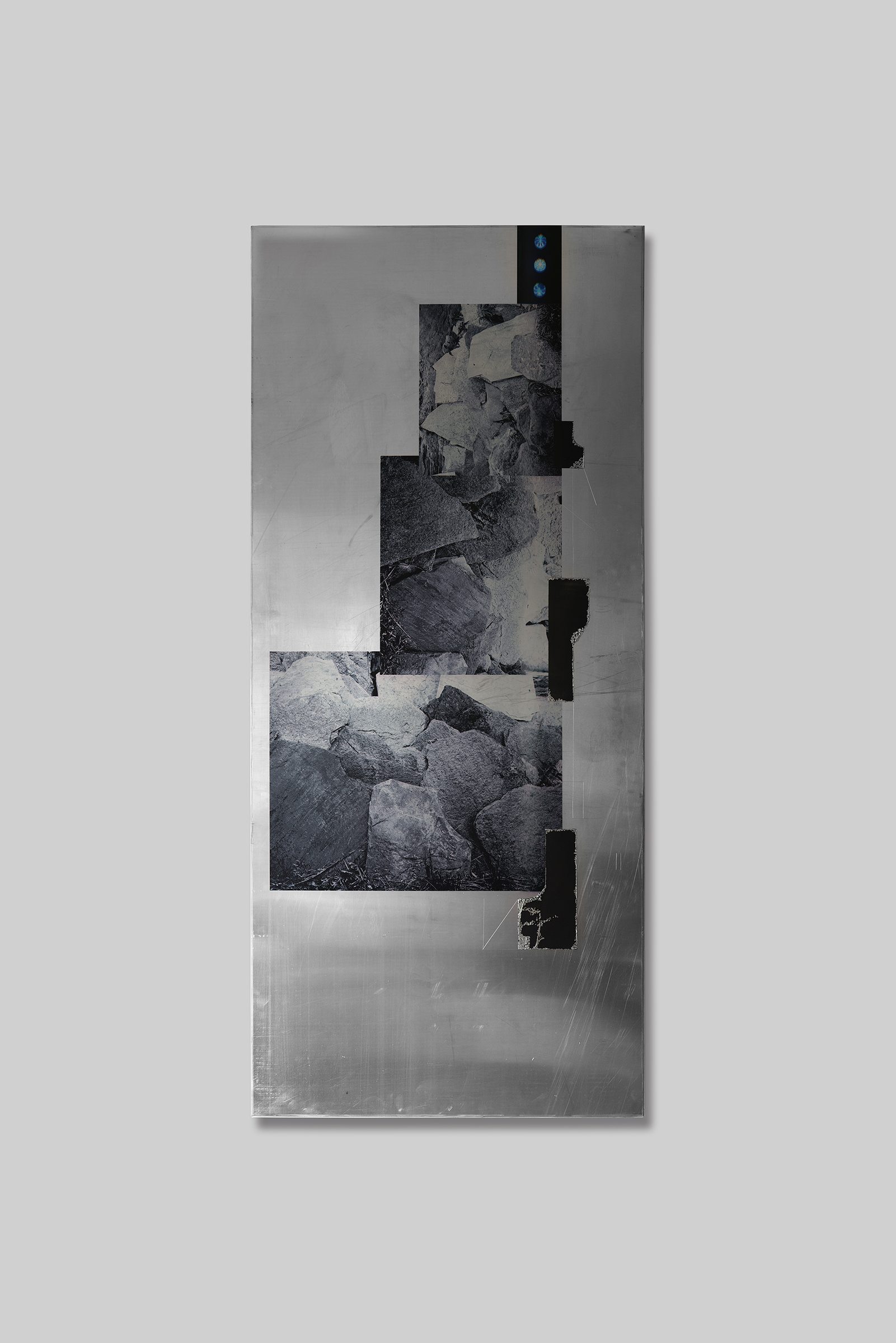
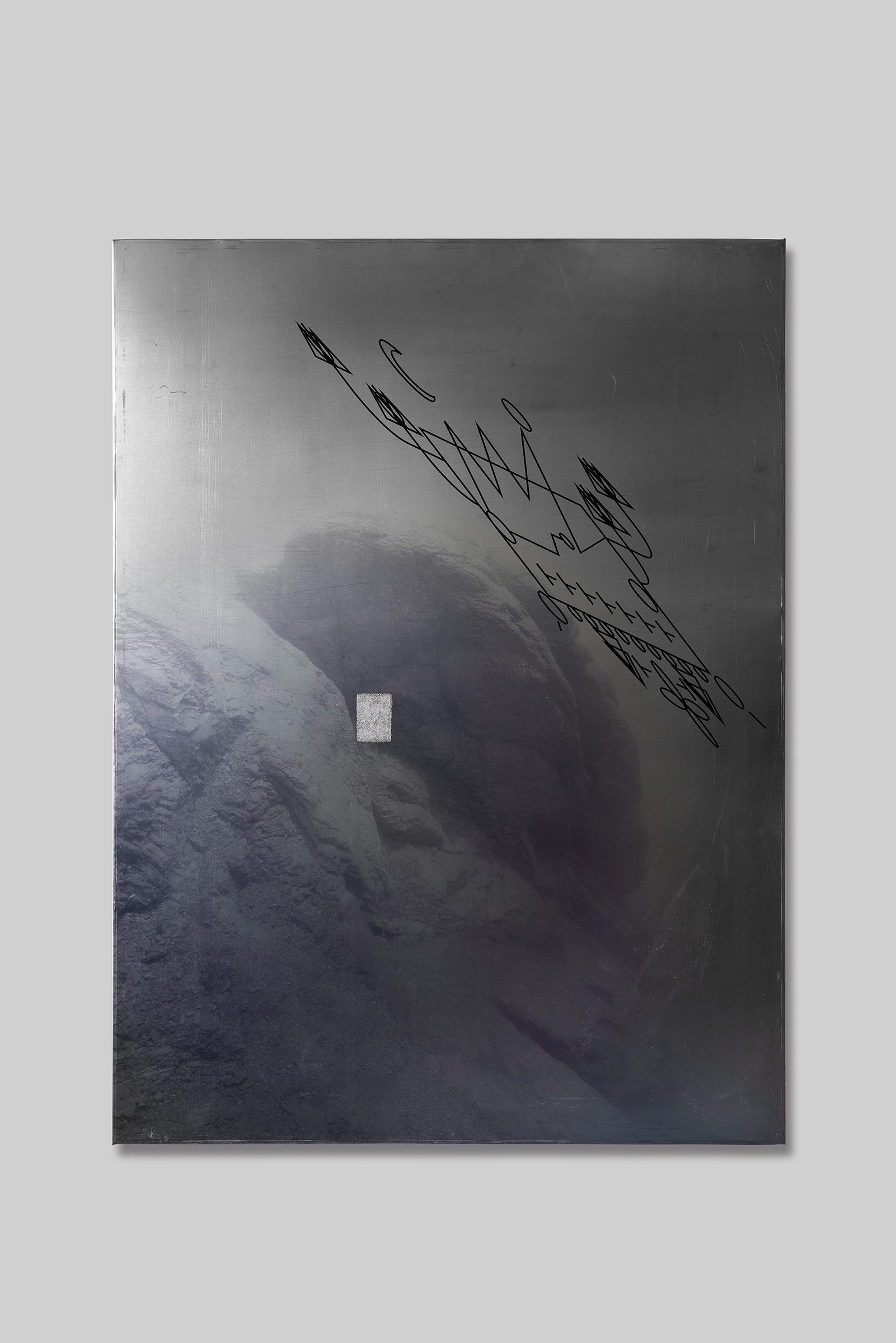
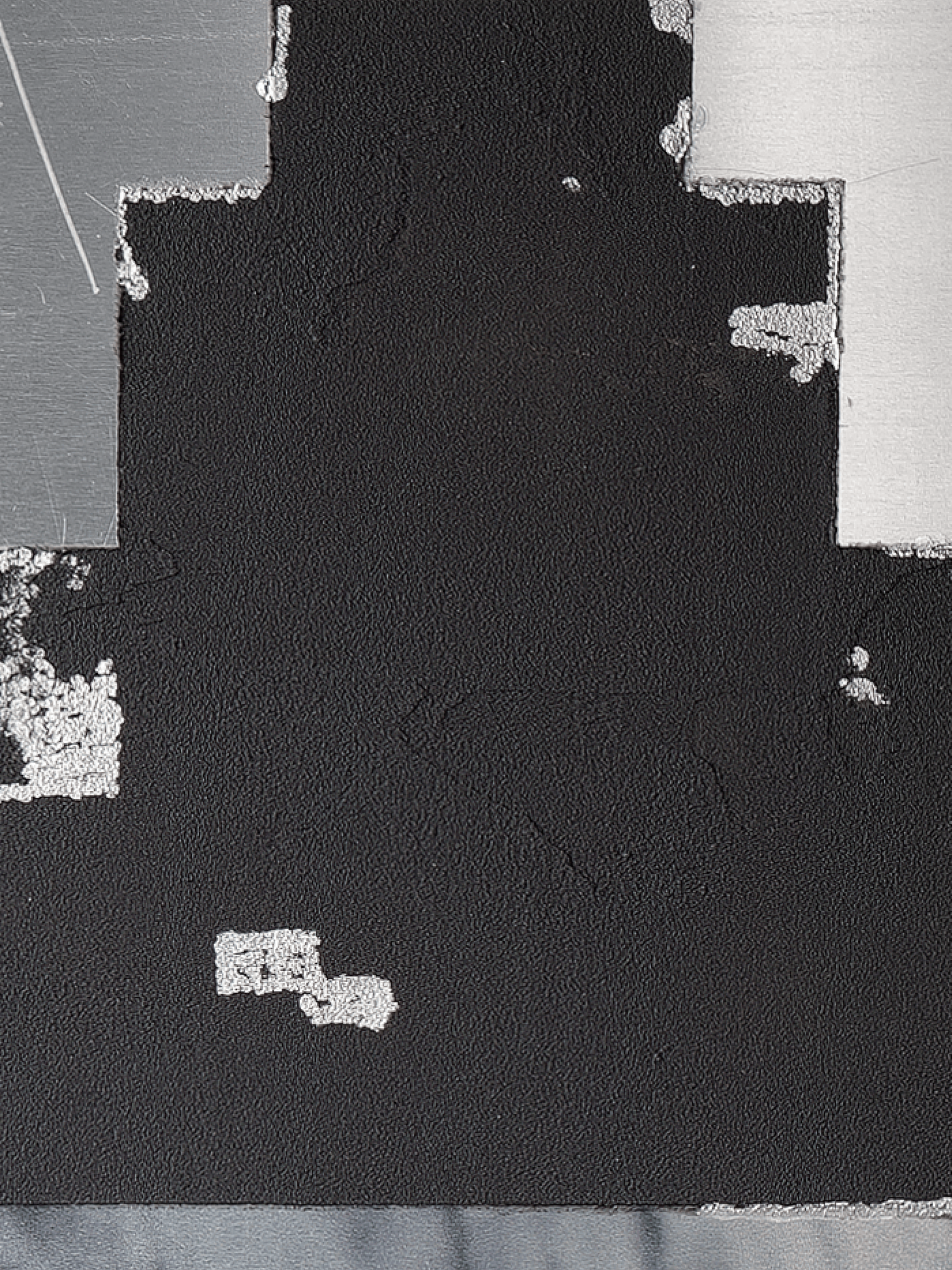
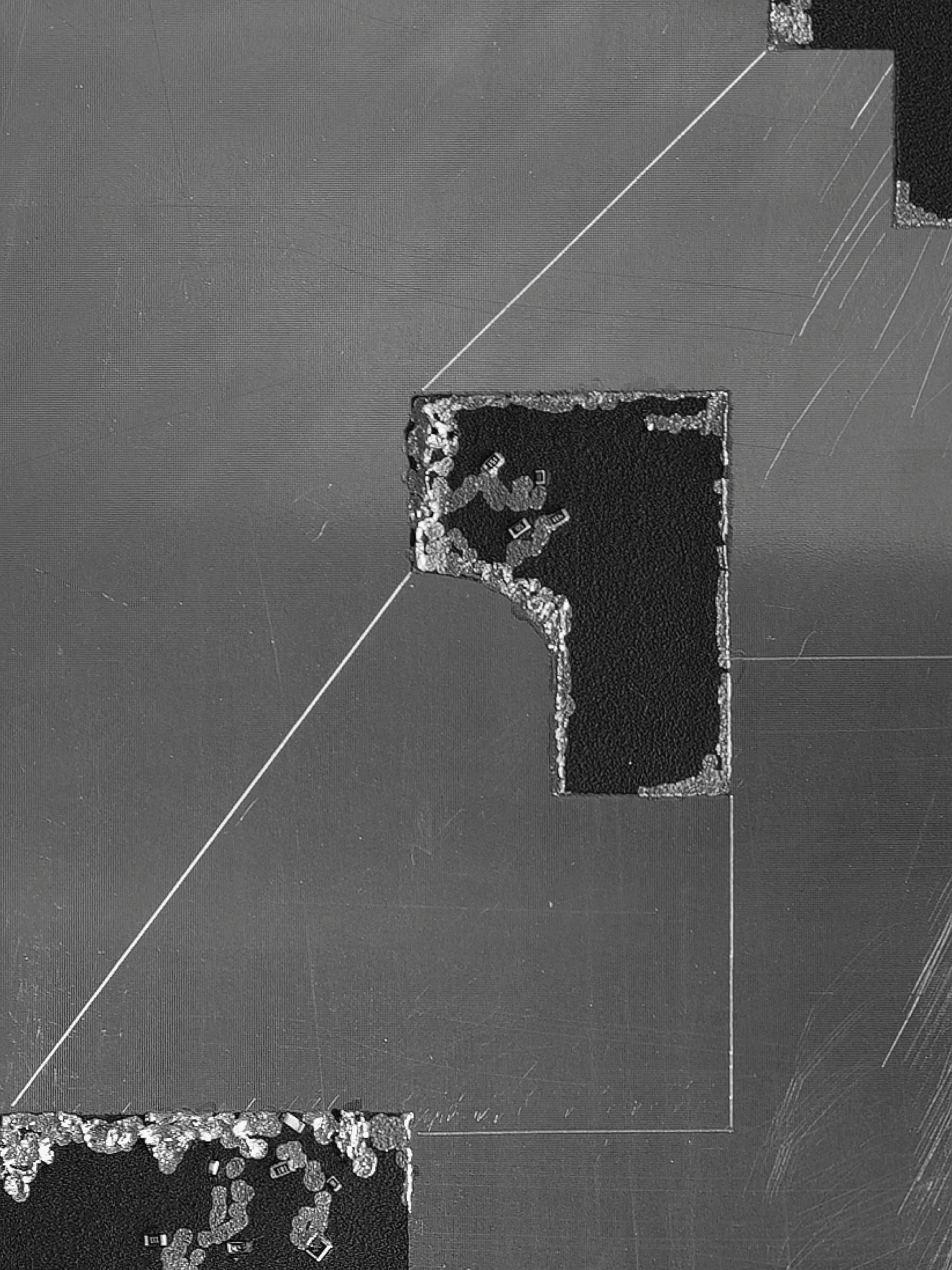
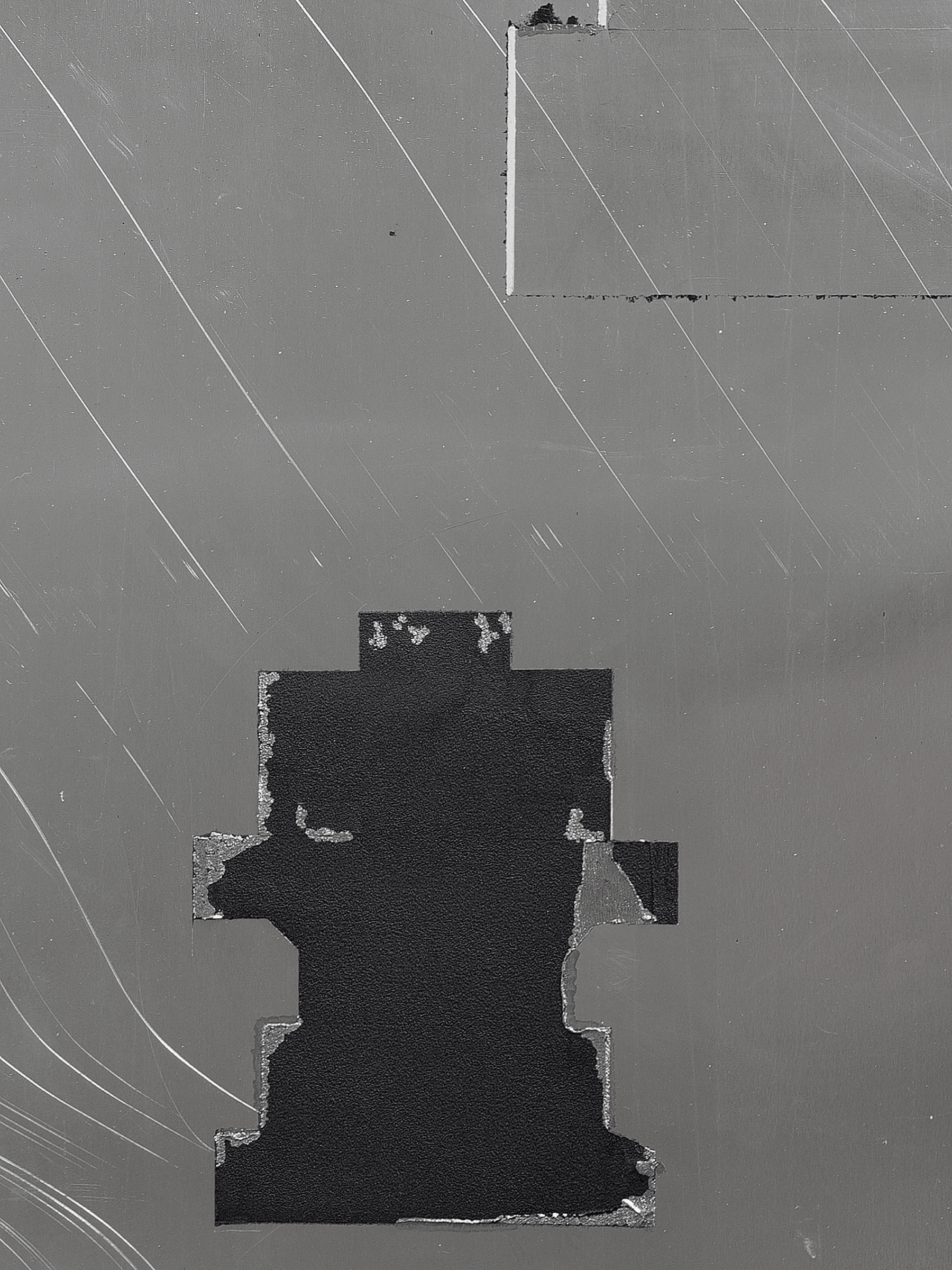
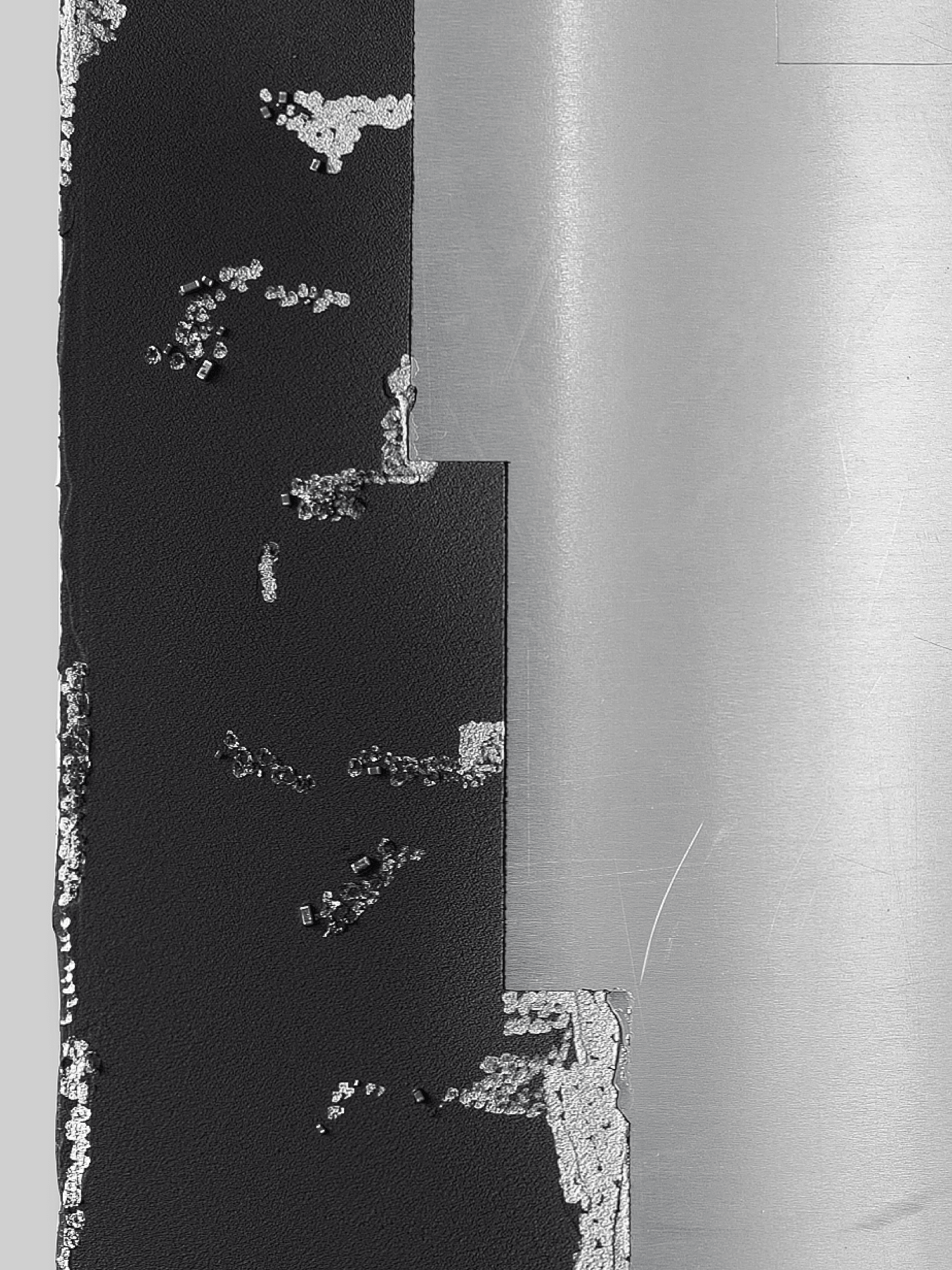
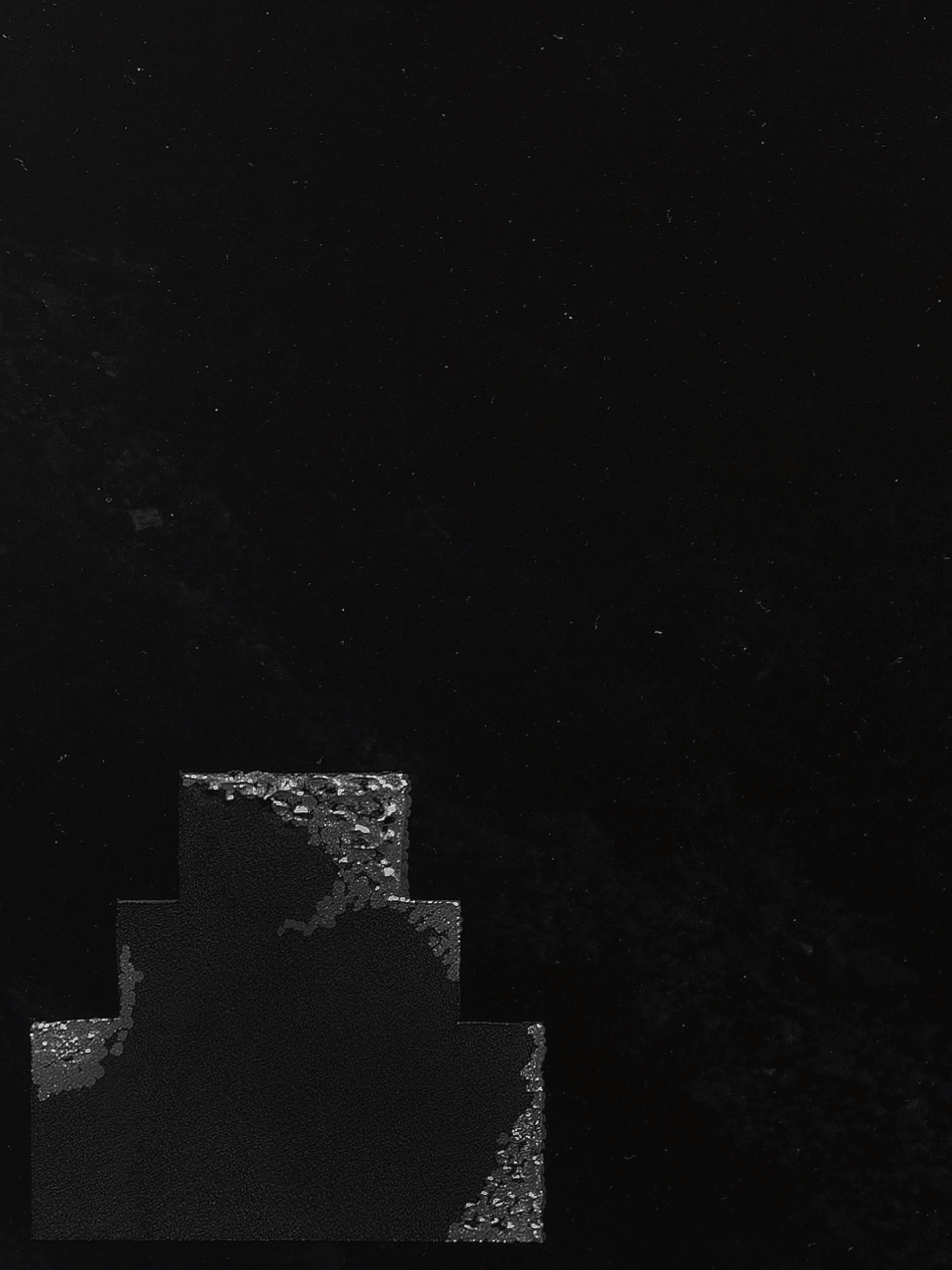
Memory Drift draws on travel photographs, sound recordings, and personal records that Bai has accumulated since 2014. Since 2024, this material has taken shape in aluminium panels and installations incorporating sound, evolving with each presentation. Each version carries forward elements from earlier iterations while introducing images, sounds, data, or materials in response to a new site. The project develops through this ongoing process of revisiting and reconfiguring its archive.
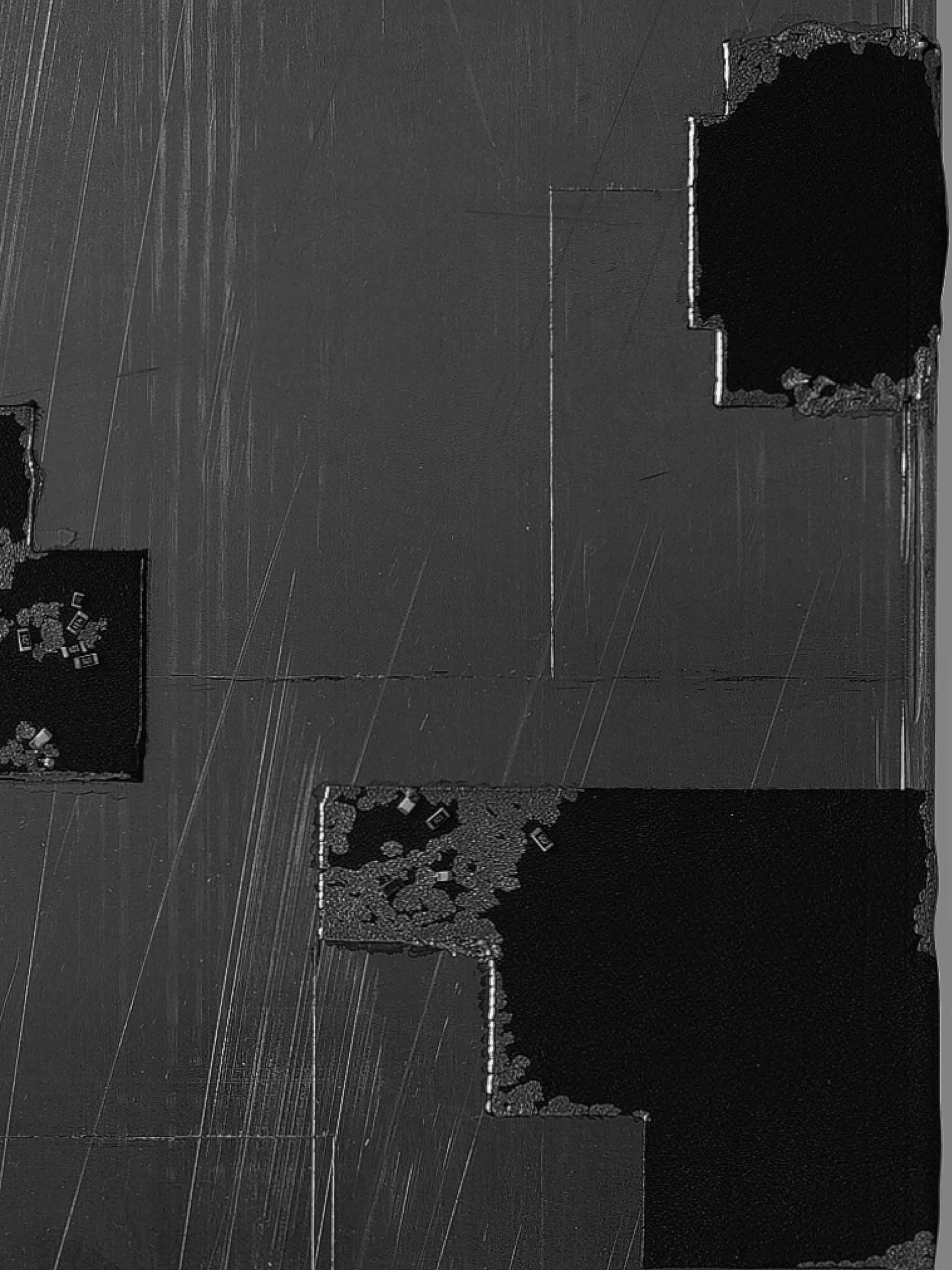
This version draws on Bai’s family’s involvement in transport. Grooved aluminium panels, water, and motors are brought together to produce vibration and sound within the installation, alongside aluminium works from earlier stages of the project.
The installation expanded to thirteen aluminium works. The positions and movement of reflections on Songshan Lake were translated into data that contributed to the generation of sound.
铝板作品增加至13件。松山湖水面反光的位置与变化被分析为数据,参与声音生成。
BUJI CULTURAL AND SPORTS CENTER — FIRST INSTALLATION布吉文体中心——首次完整装置
Eleven aluminium works were presented alongside eleven recordings selected from Bai’s sound archive. The two groups corresponded in number but were not individually paired, leaving viewers to form their own connections between image and sound.
Photography, aluminium panels, symbols, moving image, sound, algorithms, metal structures, motors, and water摄影、铝板、符号、动态影像、声音、算法、金属结构、电机与水
EXHIBITION
100+ Asia Art Season, Buji Cultural and Sports Center, Shenzhen, 2024
Songshan Lake Biennale, Dongguan, 2025
Wanderer, Between Gallery, ALOT Creation Factory, 10F Buji Cultural and Sports Center, Shenzhen, 2026100+亚洲艺术季,布吉文体中心,深圳,2024
松山湖双年展,东莞,2025
行方不明,艺术多库·知间画廊,布吉文体中心10层,深圳,2026