DENOISE去噪
/PROJECT_INFO
/OVERVIEW
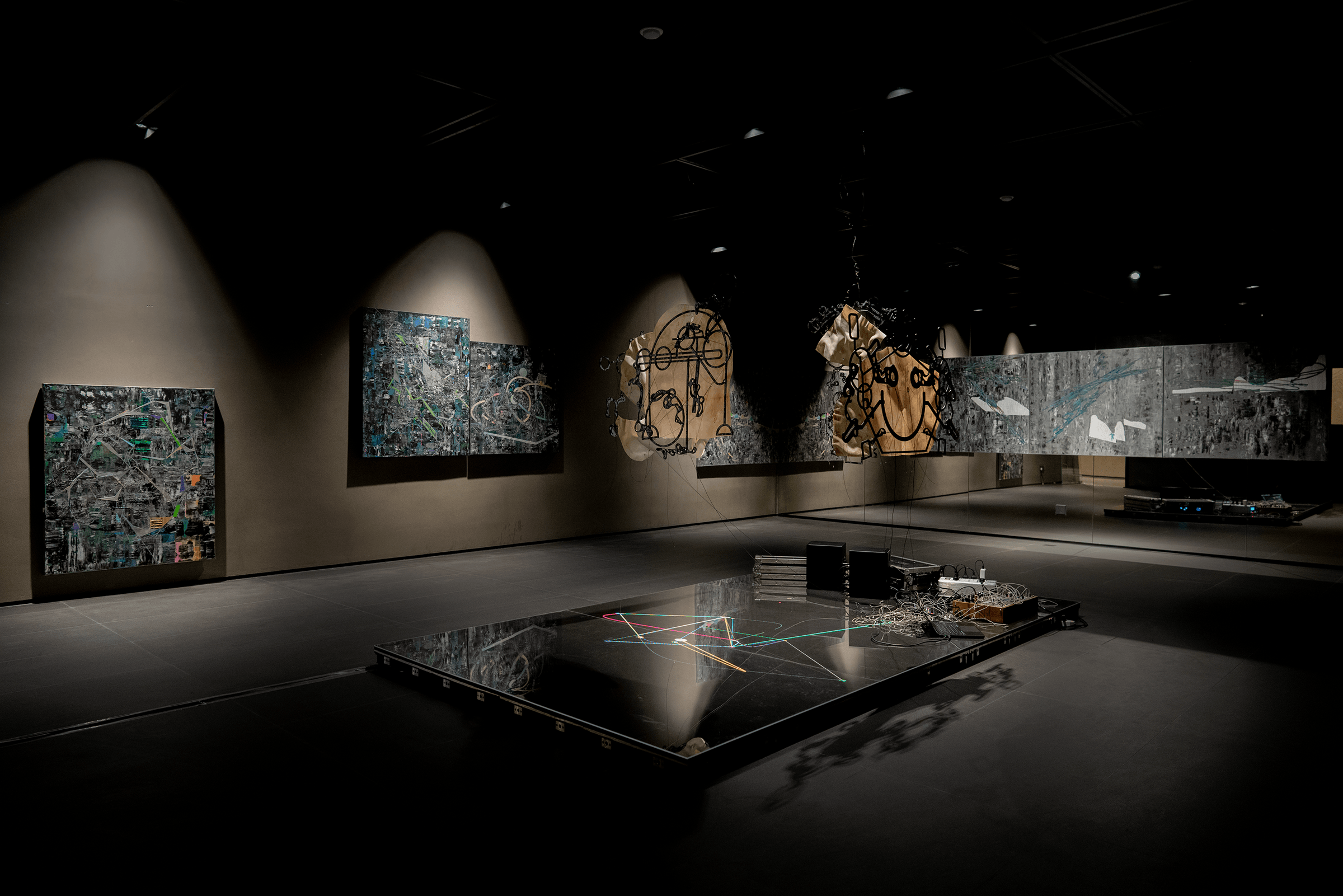
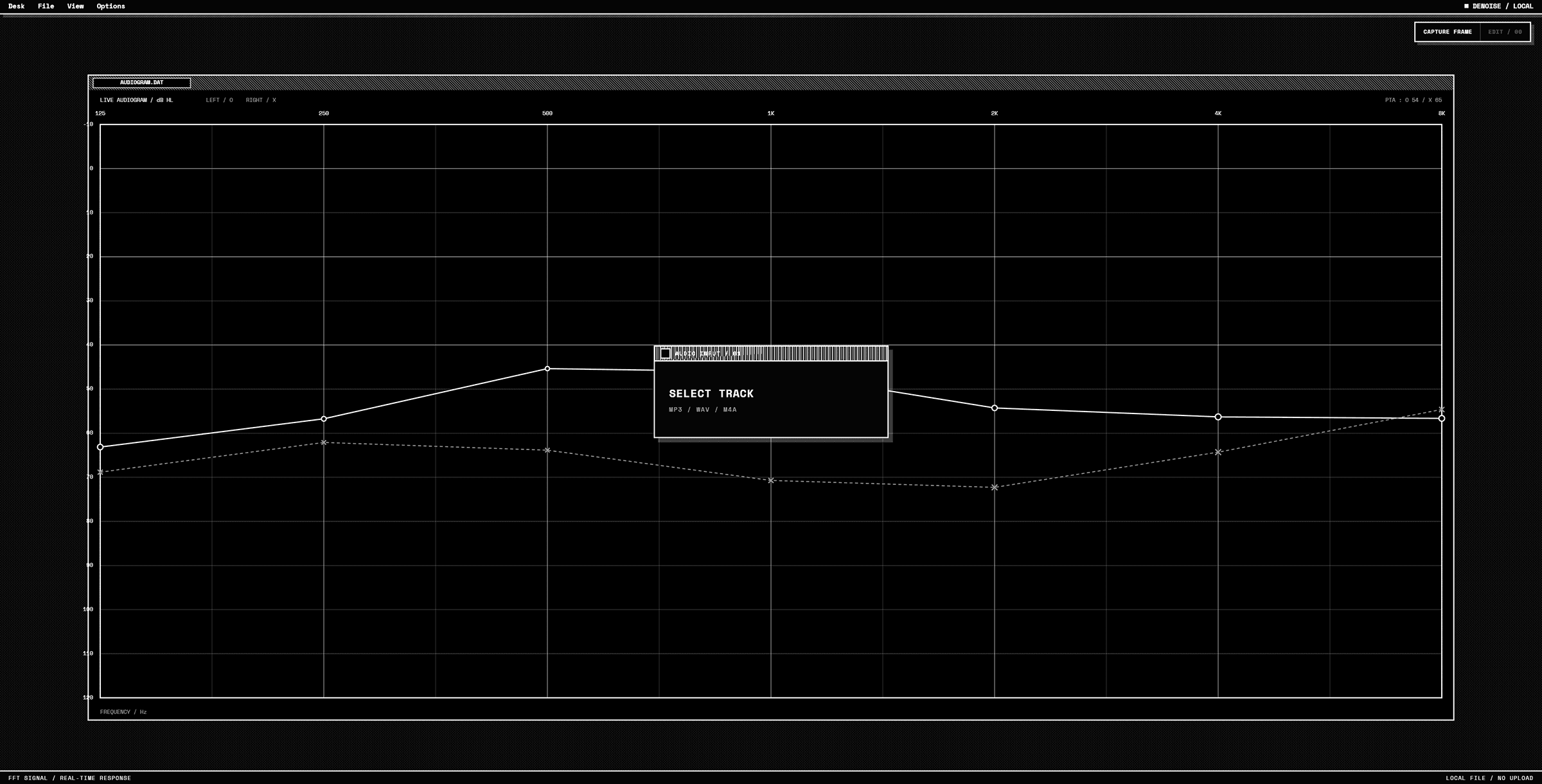
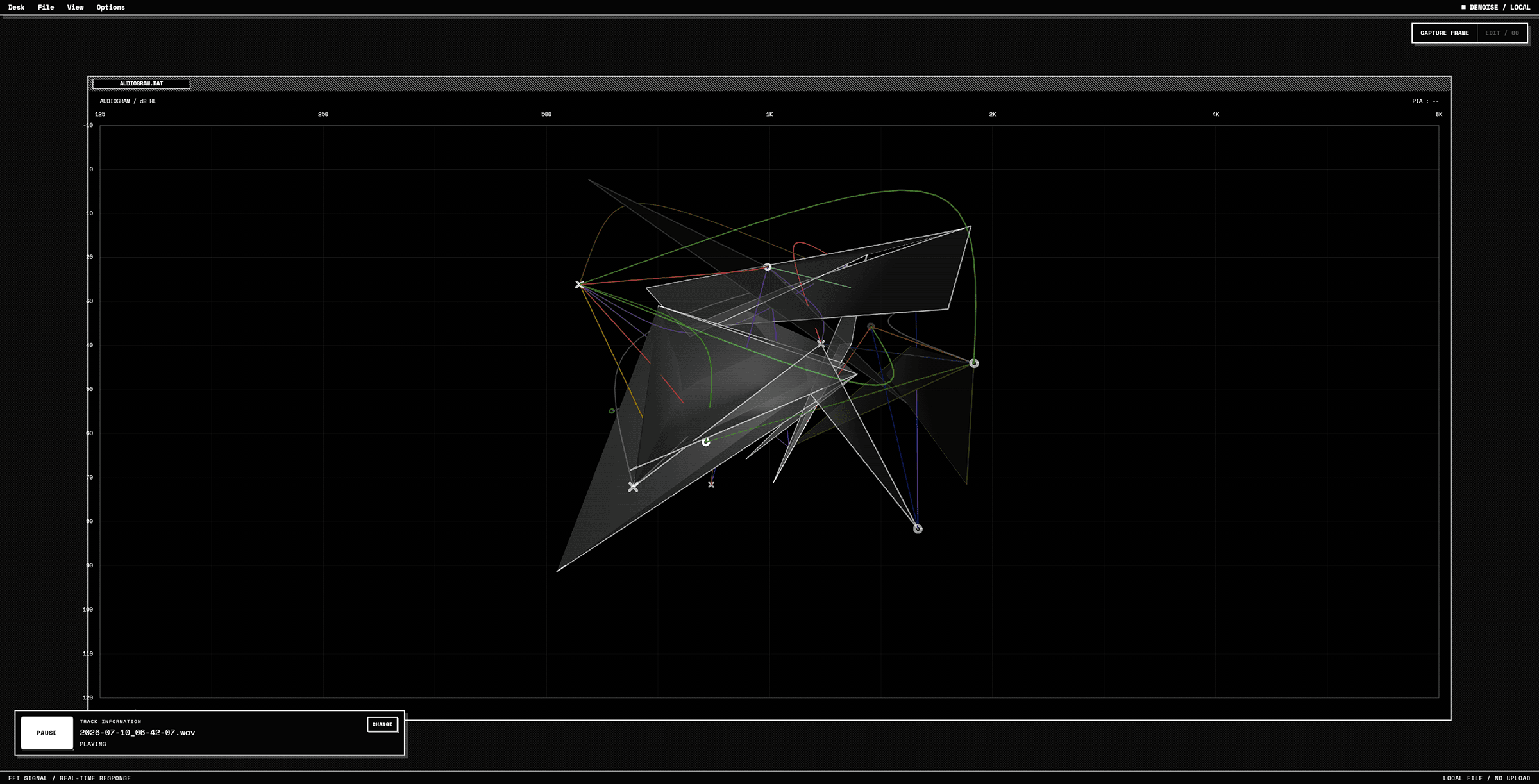
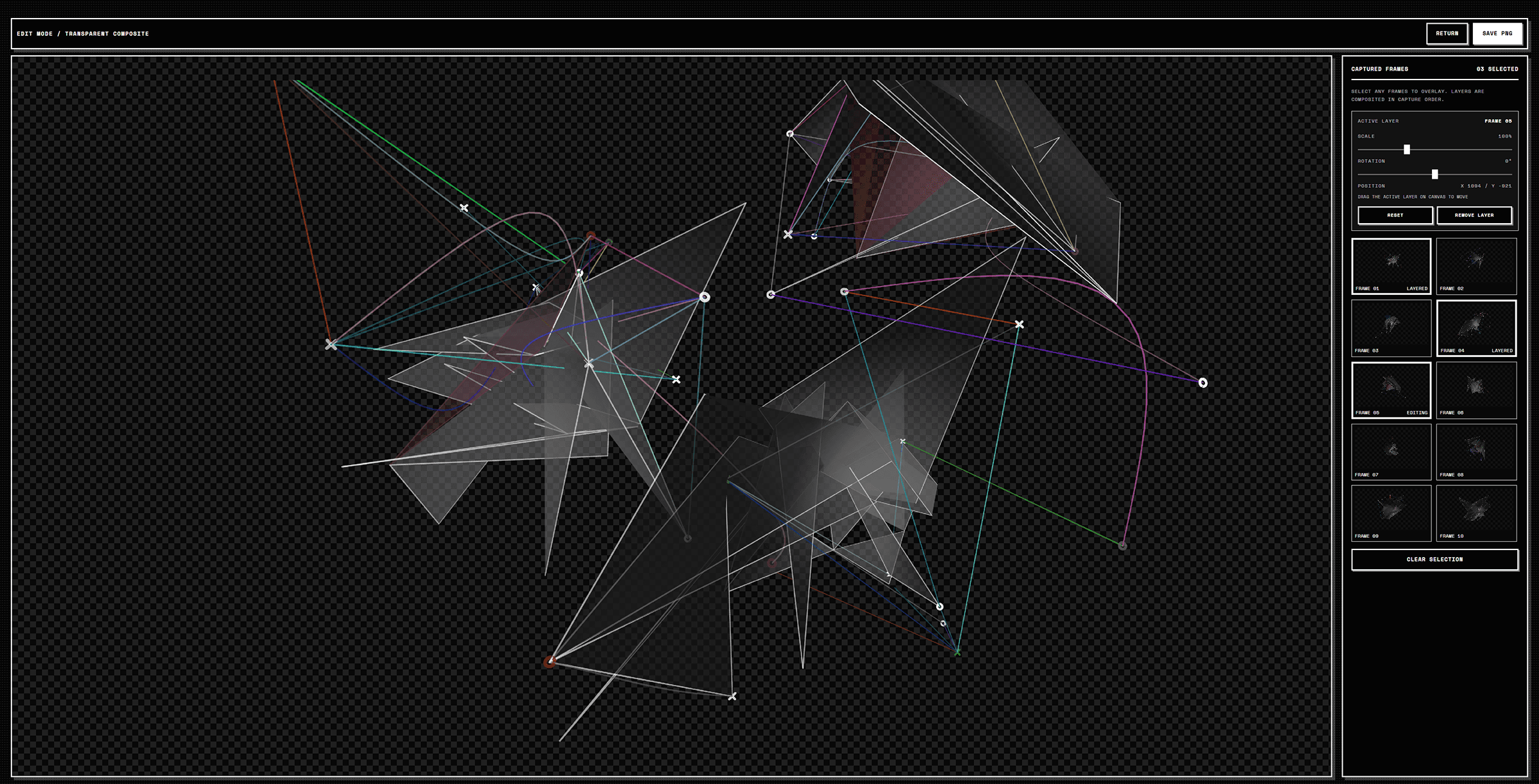
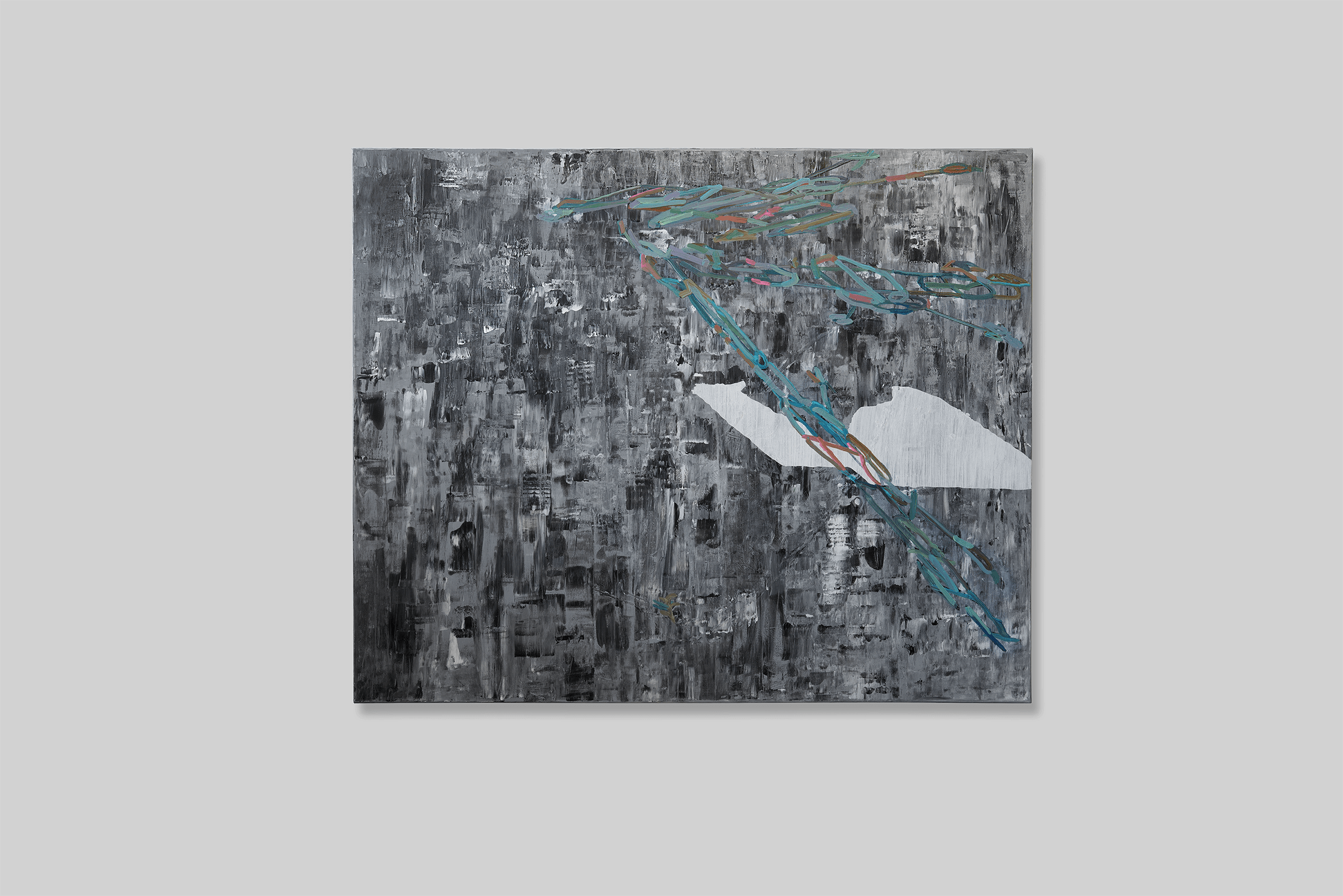
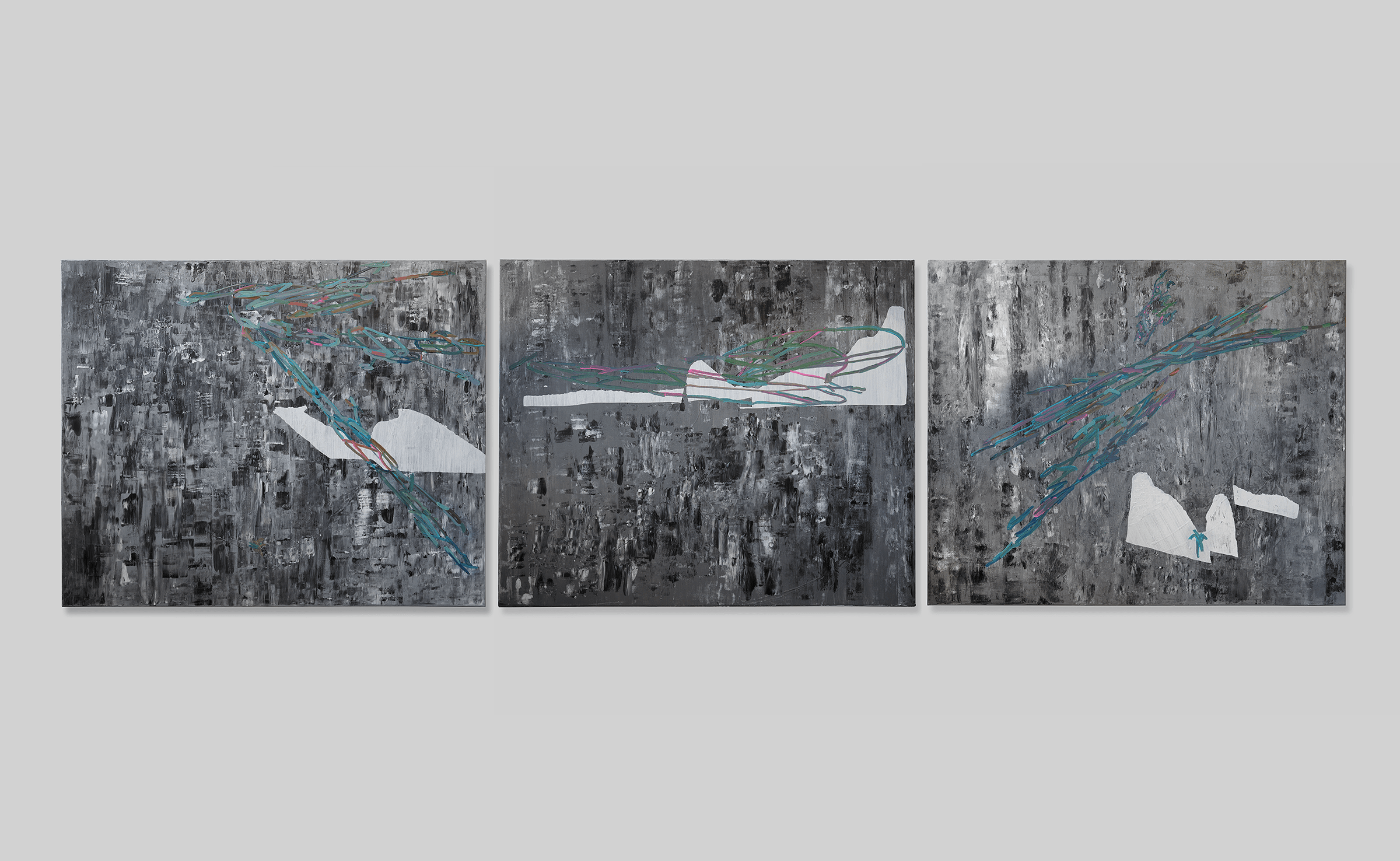
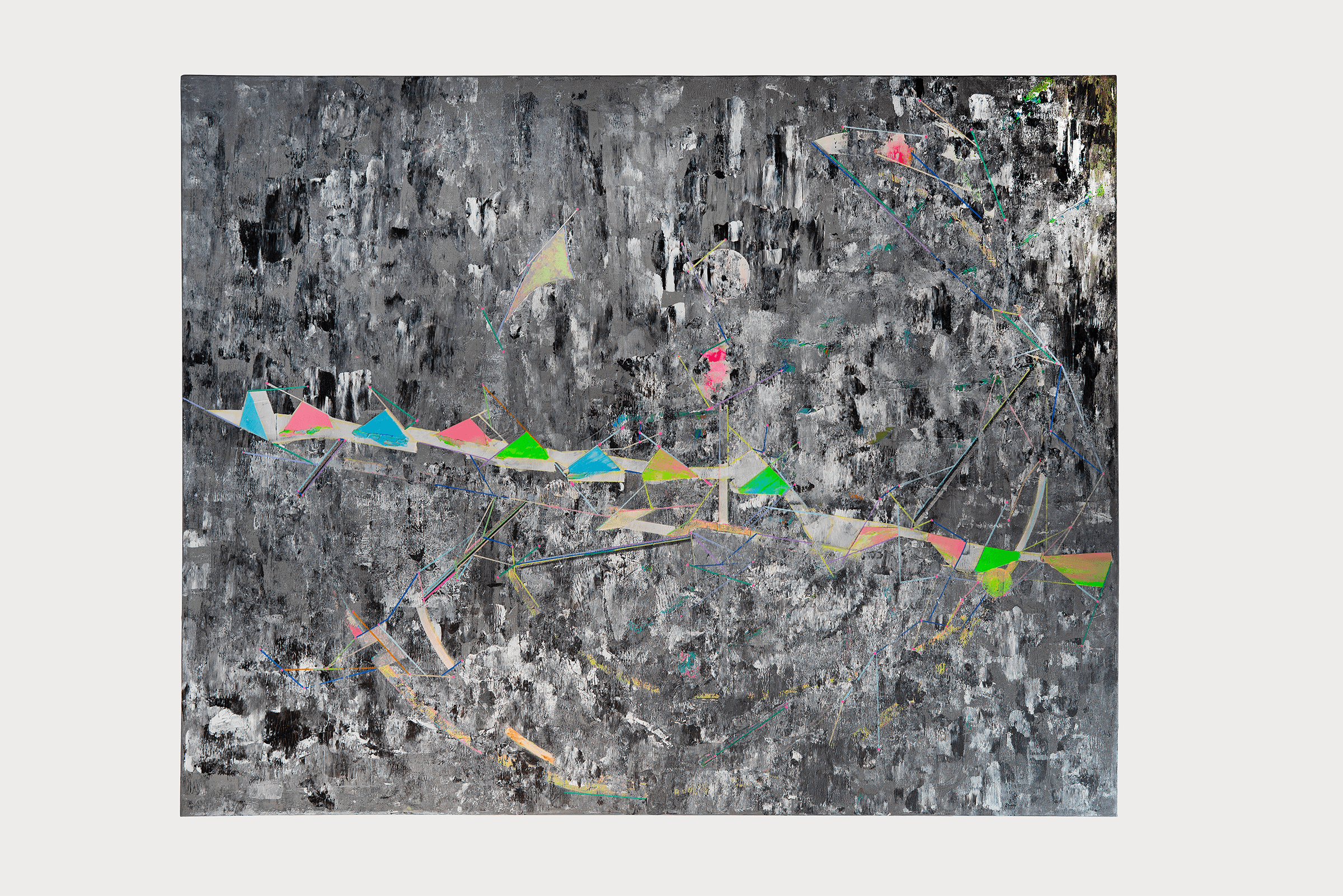
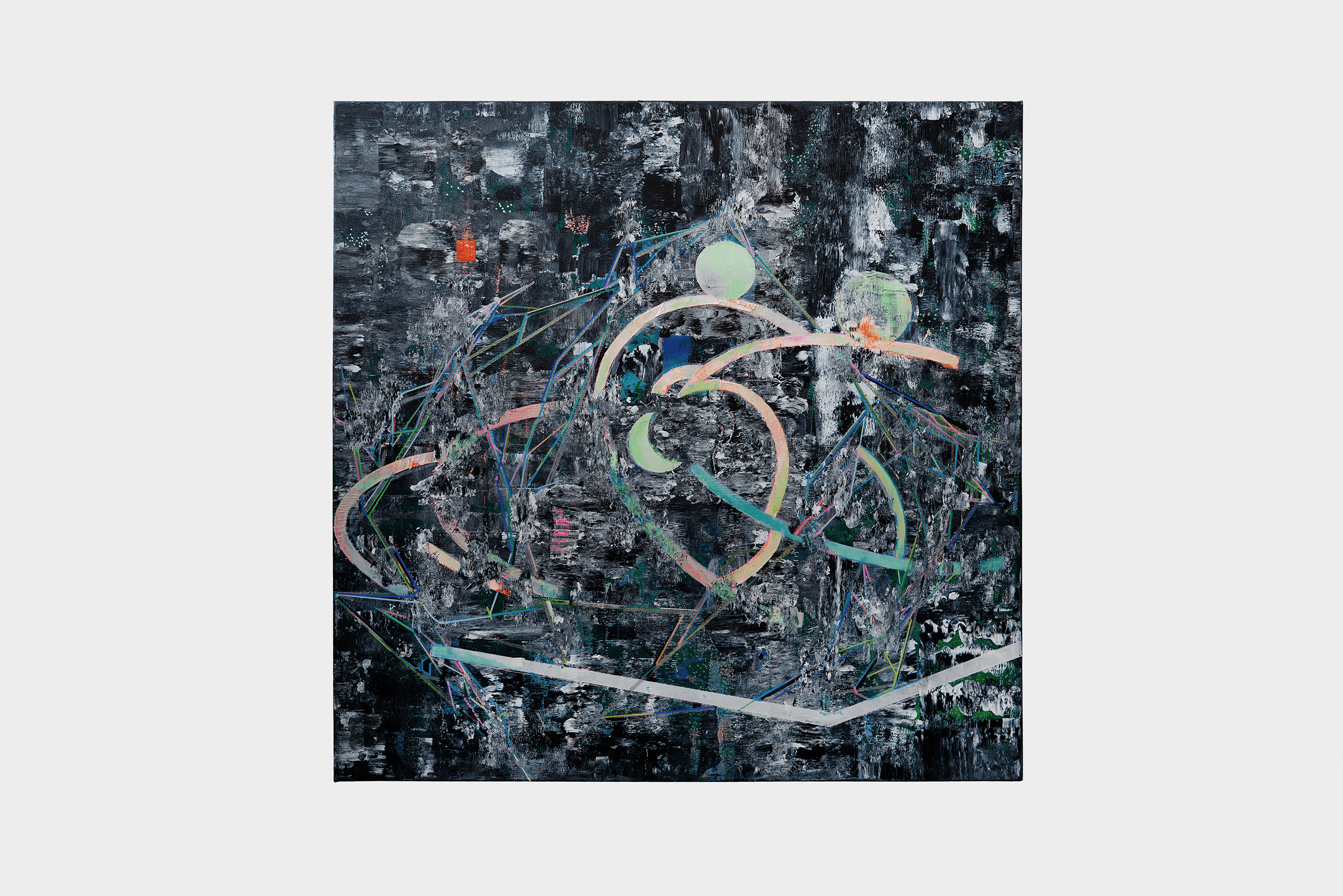
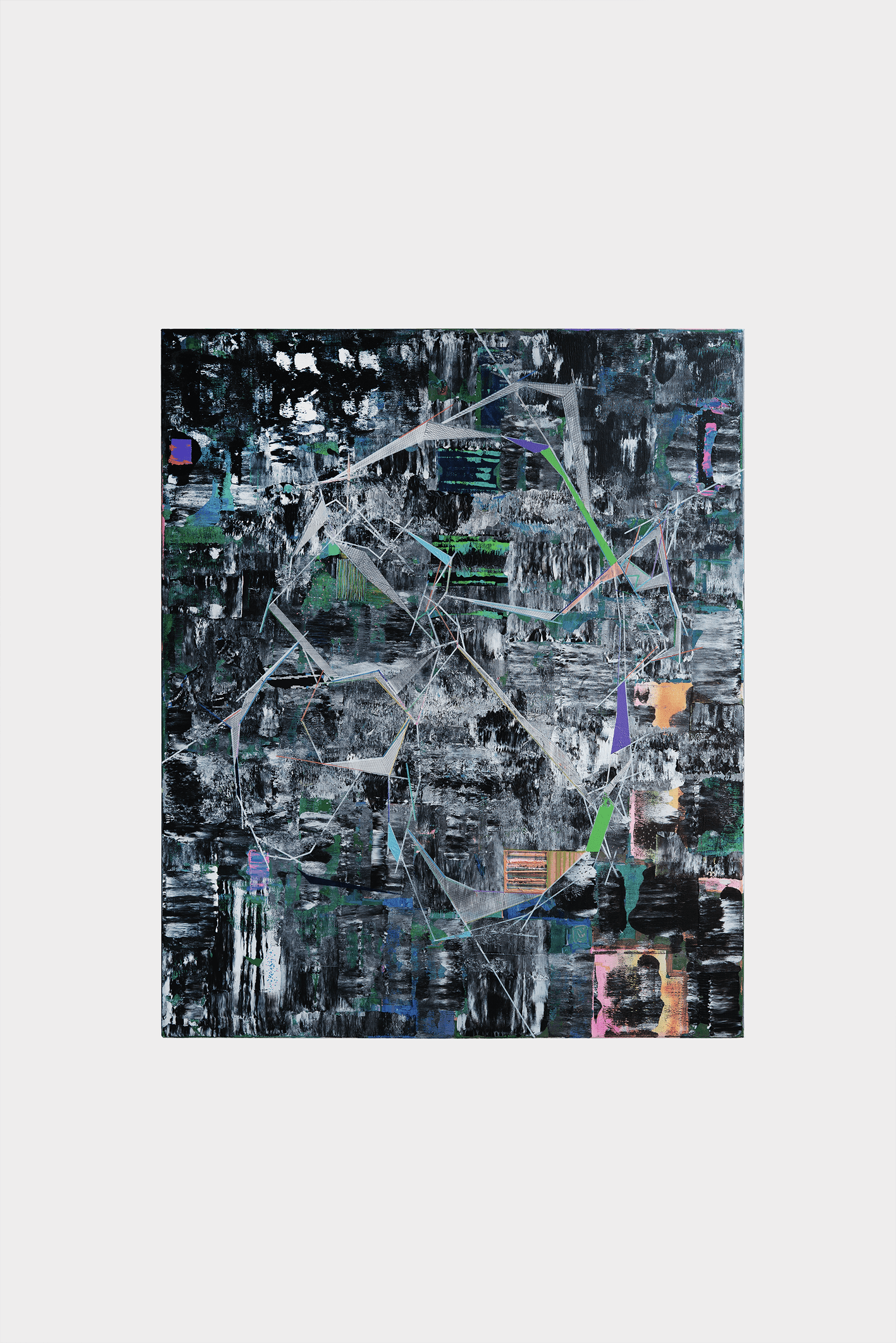
Denoise grows from changes in hearing and persistent tinnitus. Using his own audiogram as the structure of custom software, Bai feeds continuously collected everyday sounds into the program in the studio, where they generate changing lines, waveforms, and diagrams in real time. He then selects, crops, recombines, and repeatedly redraws these results, building them layer by layer on canvas. Exhibition versions use the same software but add shamanic drums as a live sound input: visitors’ strikes drive the on-screen image in real time, while the sounds are also recorded, stored, and later replayed at random. Rather than “remove noise,” the work follows how auditory experience keeps changing across software, painting, installation, and human judgement.
/FULL_PROJECT_TEXT
Denoise began with bodily experiences of hearing loss, persistent tinnitus, and hearing tests. The audiogram was the first external structure to translate what could previously only be felt by the body into frequencies, thresholds, and curves. Bai does not treat the chart as a medical conclusion; instead, he uses it as a structure through which a private sensation can begin to enter forms that can be recorded, compared, and remade.
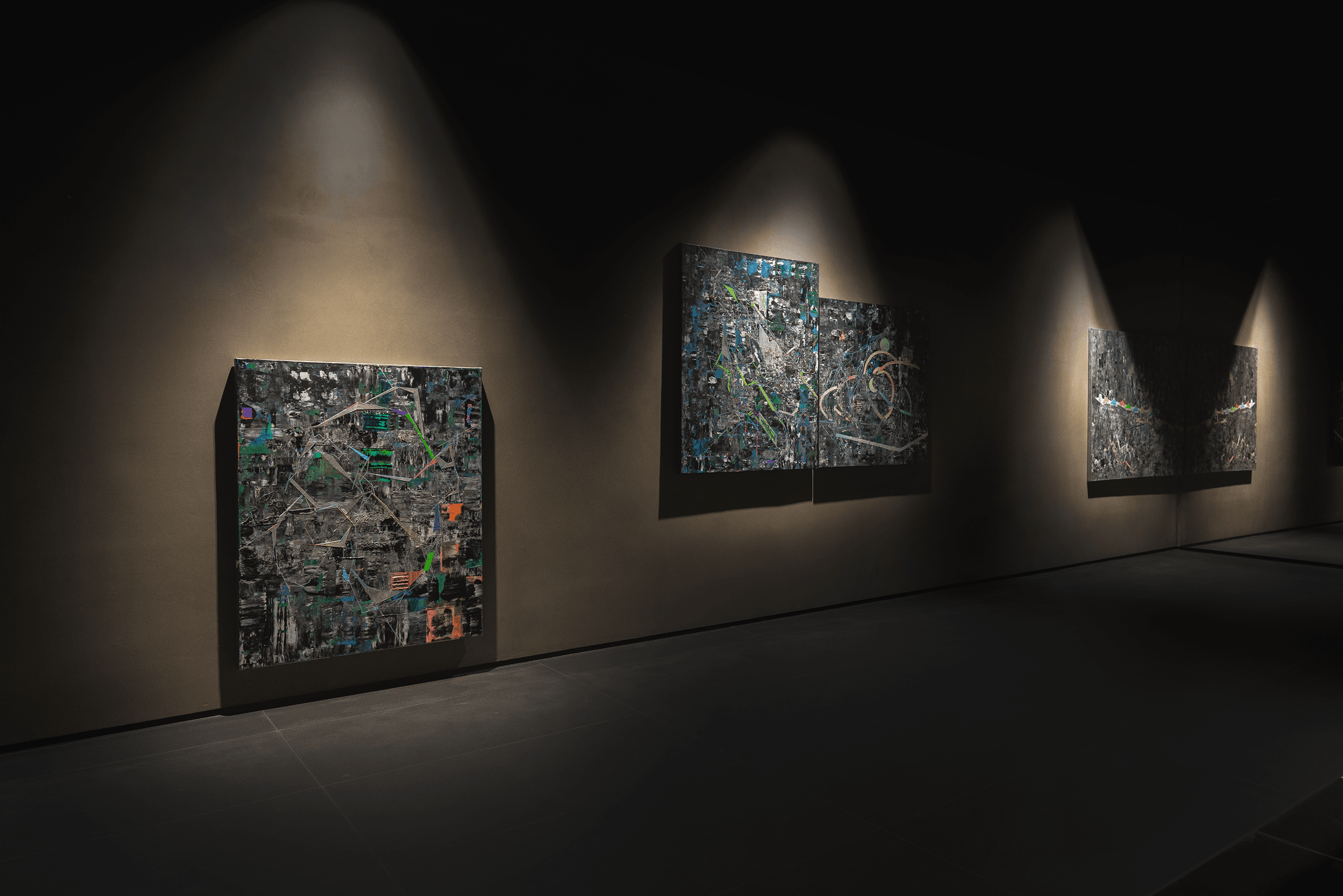
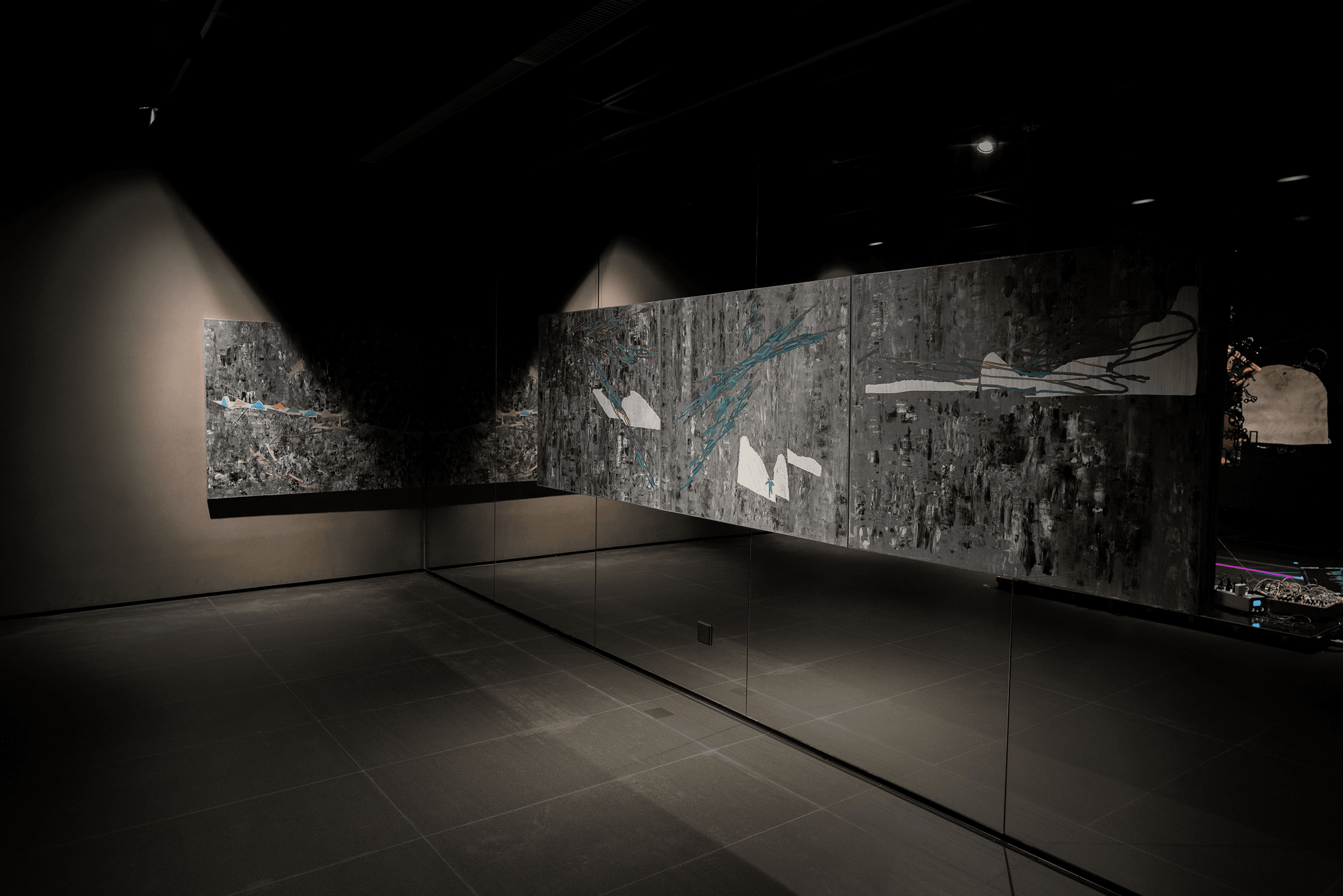
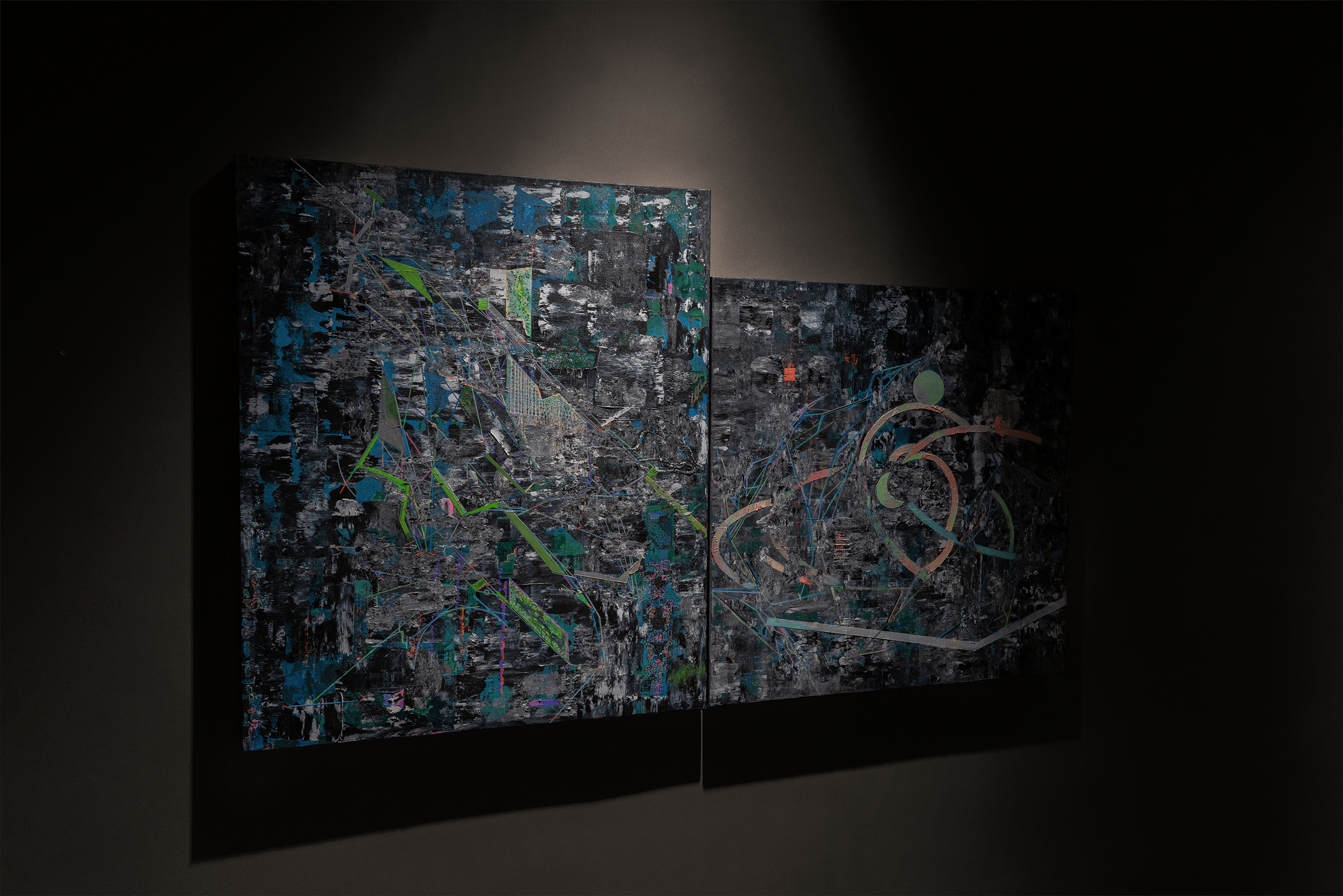
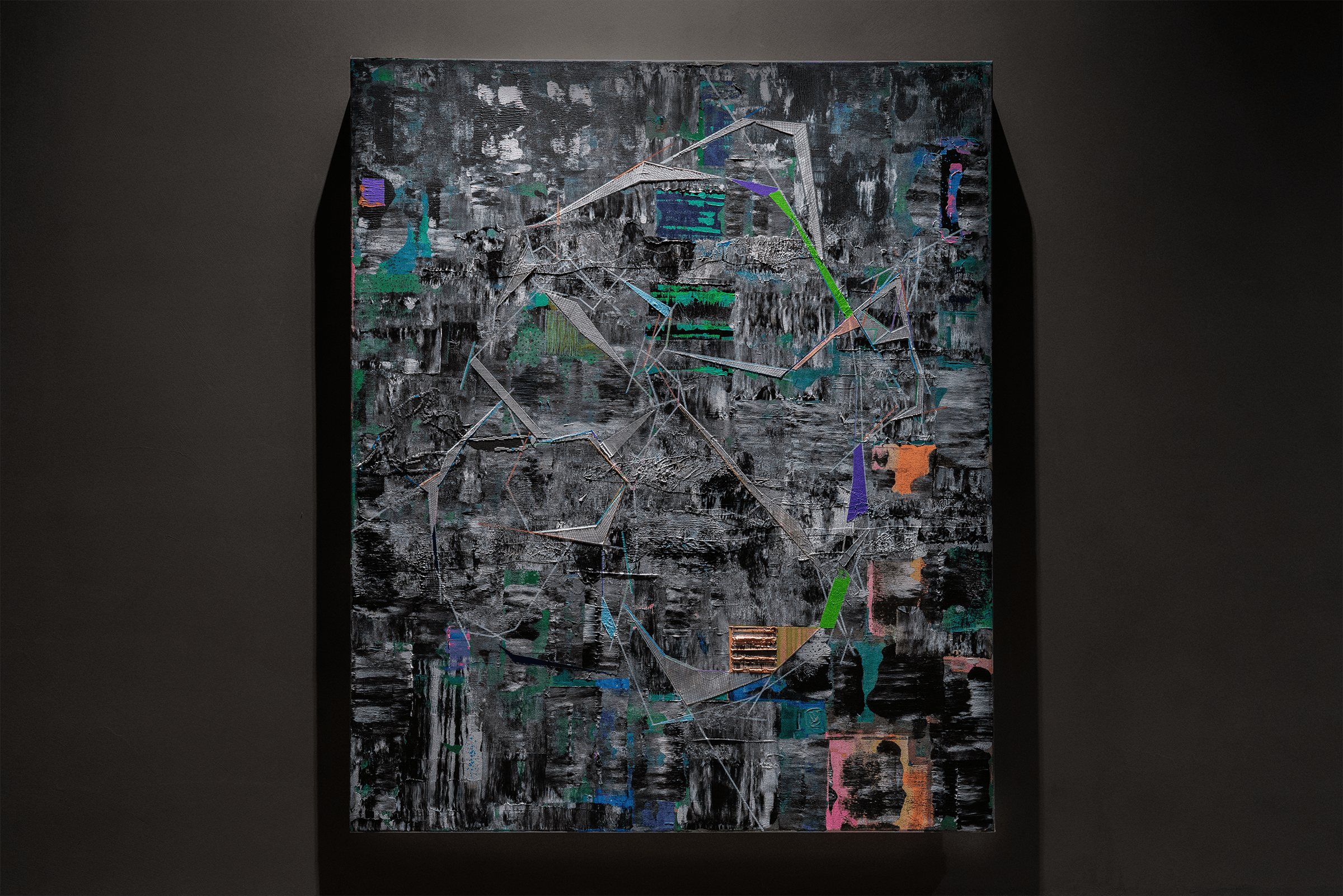
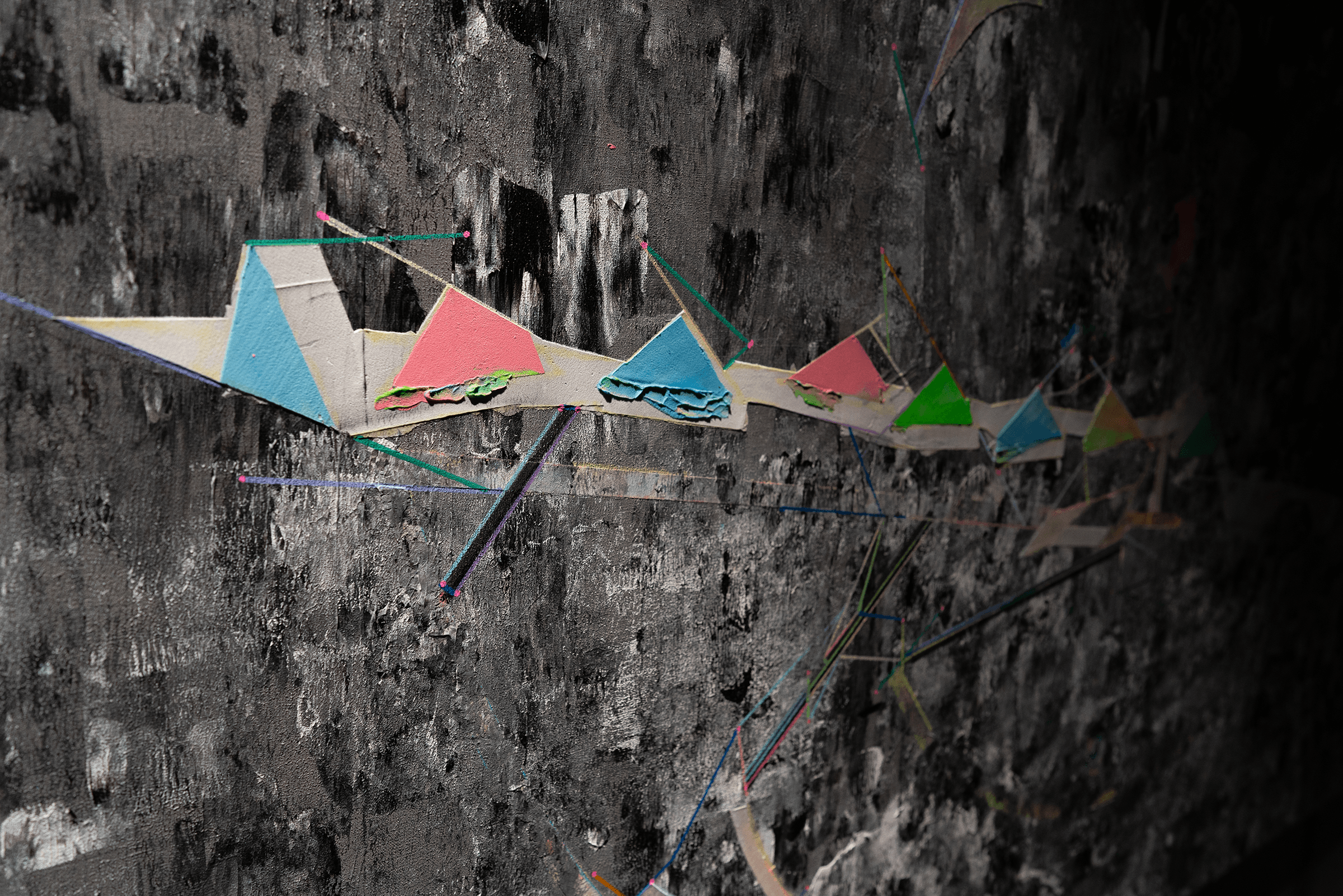
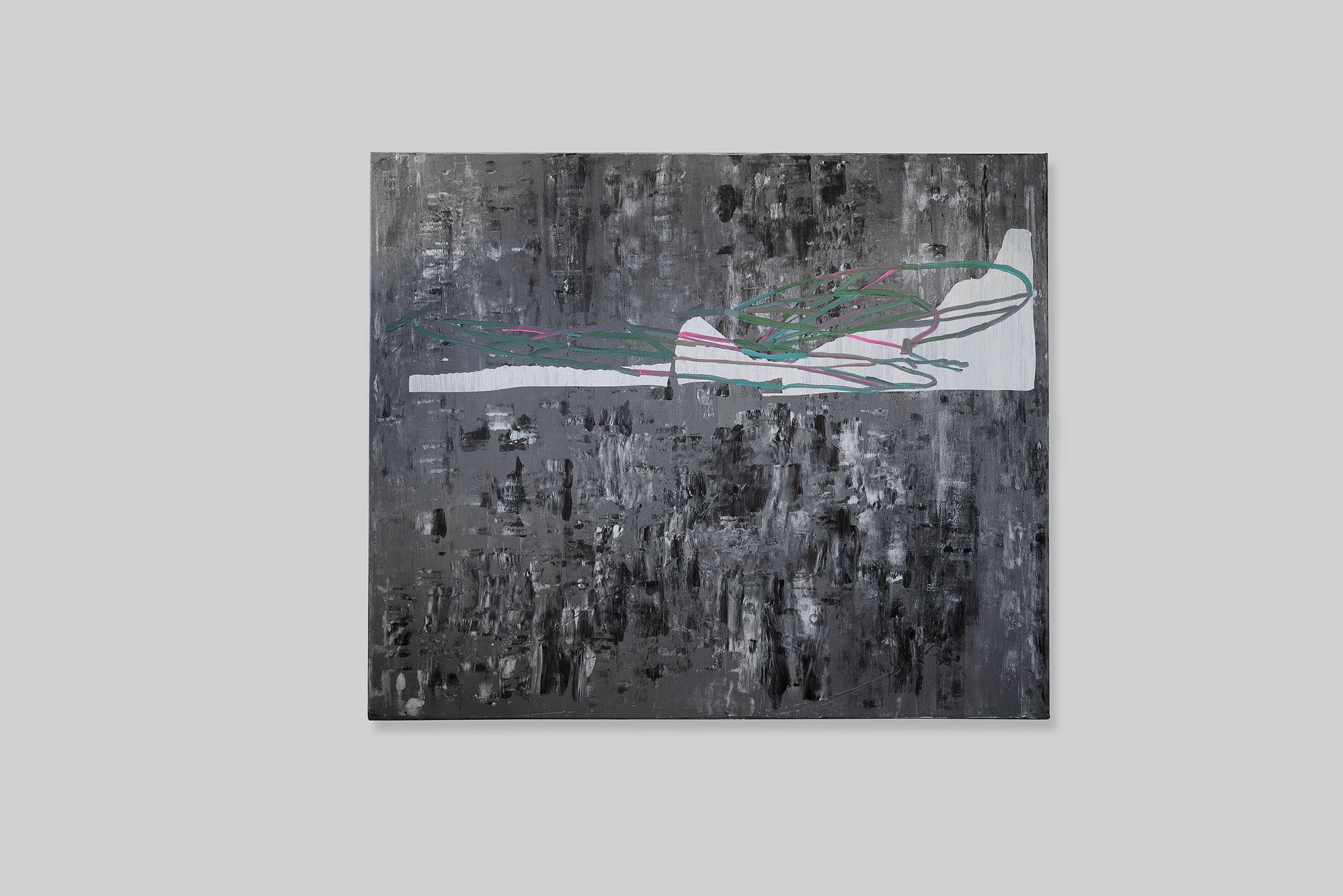
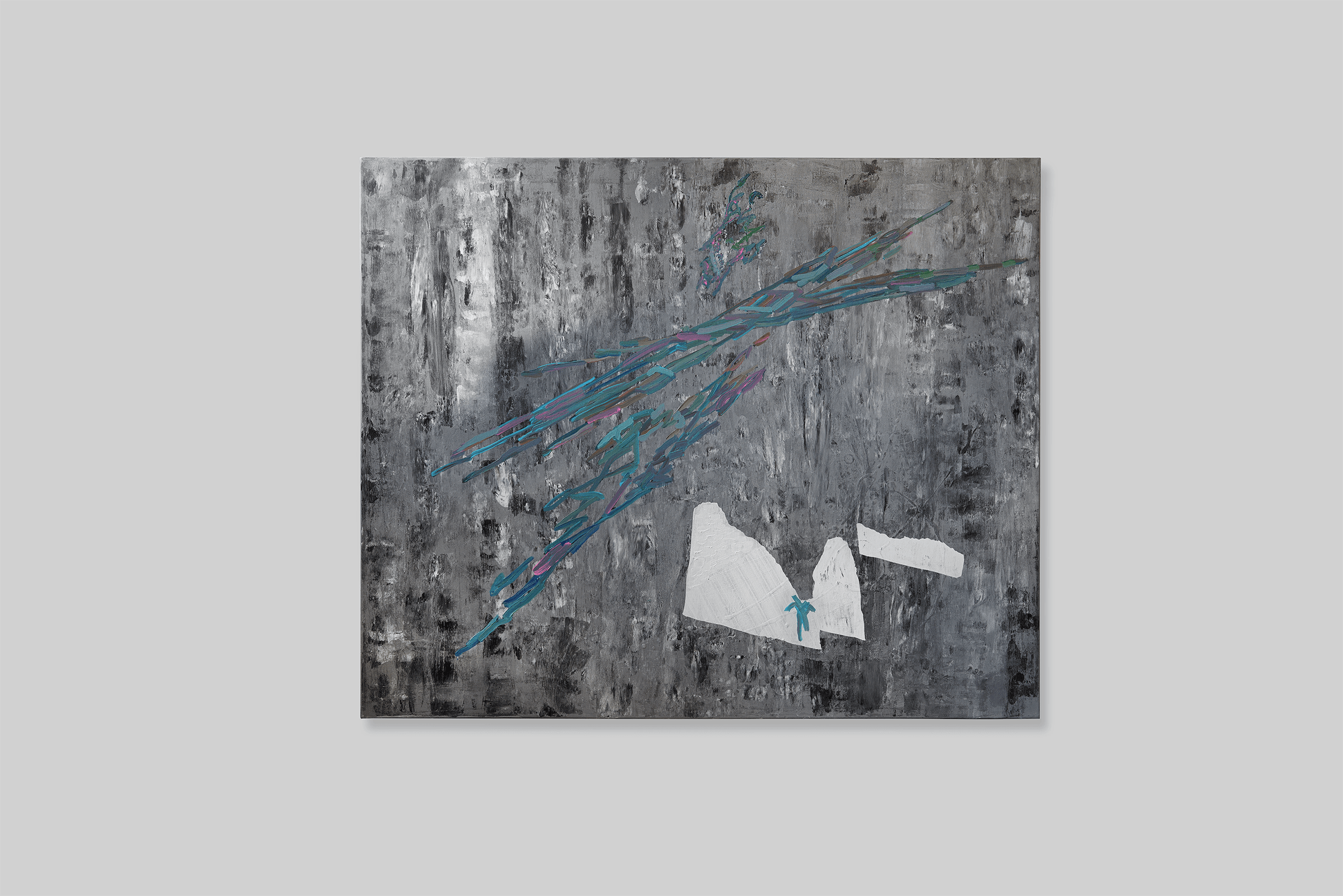
As he learned to live with tinnitus, meditation and inward listening gradually became part of his daily life. The audiogram also shifted from a medical record into a working structure. Bai continually collects everyday sounds and feeds them into custom software built around his hearing-test chart. The sounds drive a changing image in real time, generating lines, waveforms, and diagrams. From these results he selects, crops, and recombines fragments, then builds them onto canvas through a sustained, day-by-day process of hand drawing. Painting is not a direct copy of software output, but the point at which human judgement re-enters the translation: what is retained, covered, layered, or stopped is decided again through the body and through time.
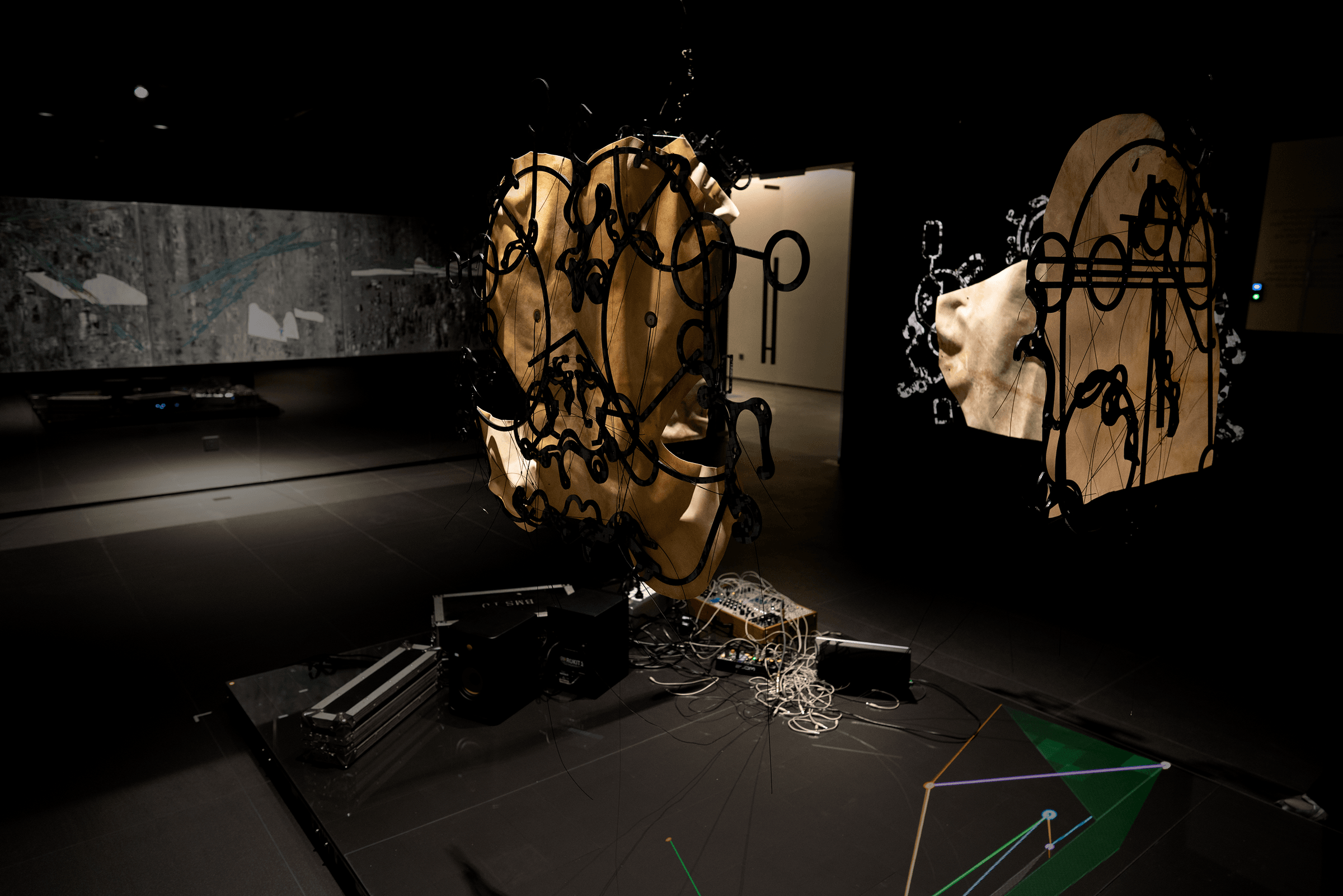
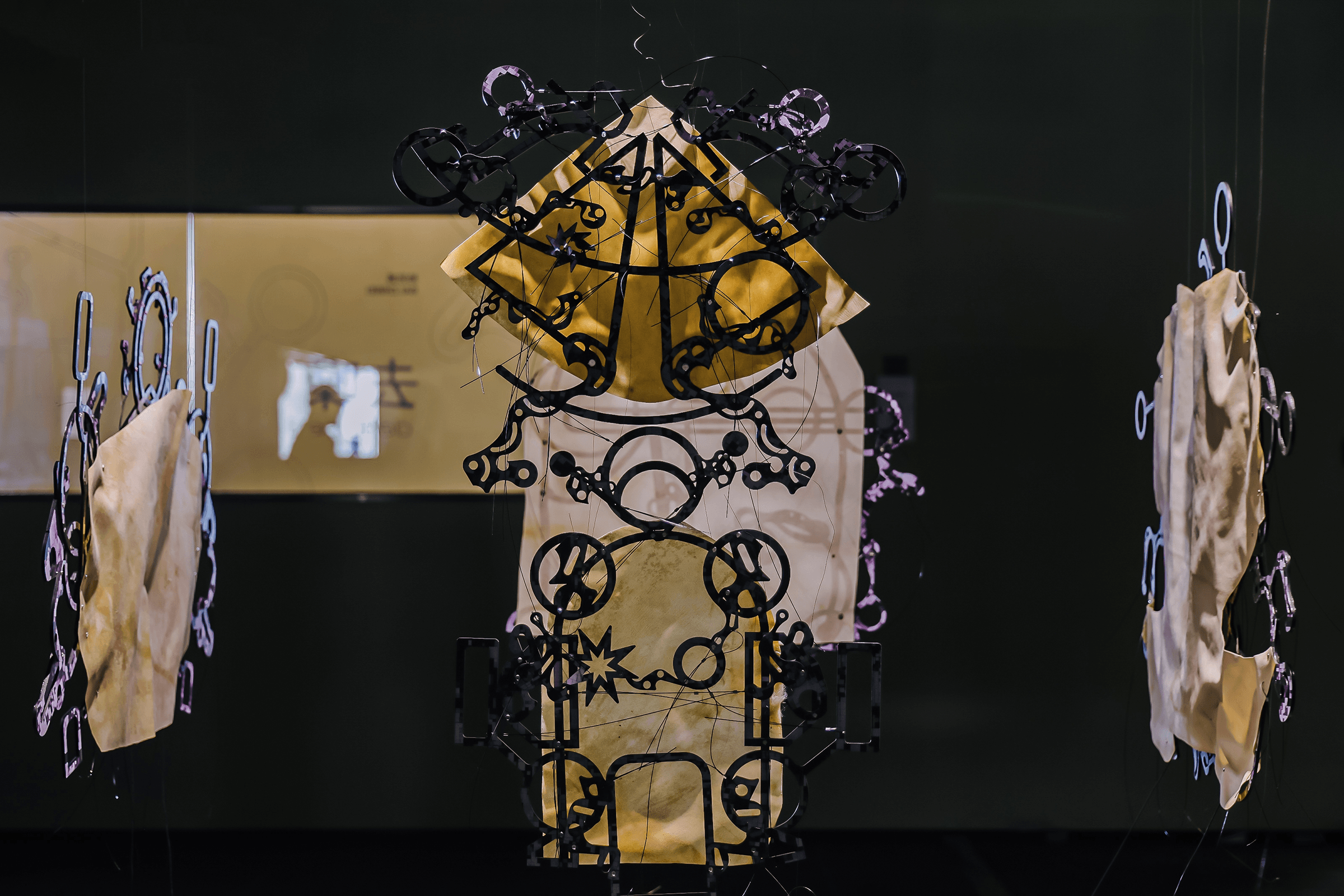
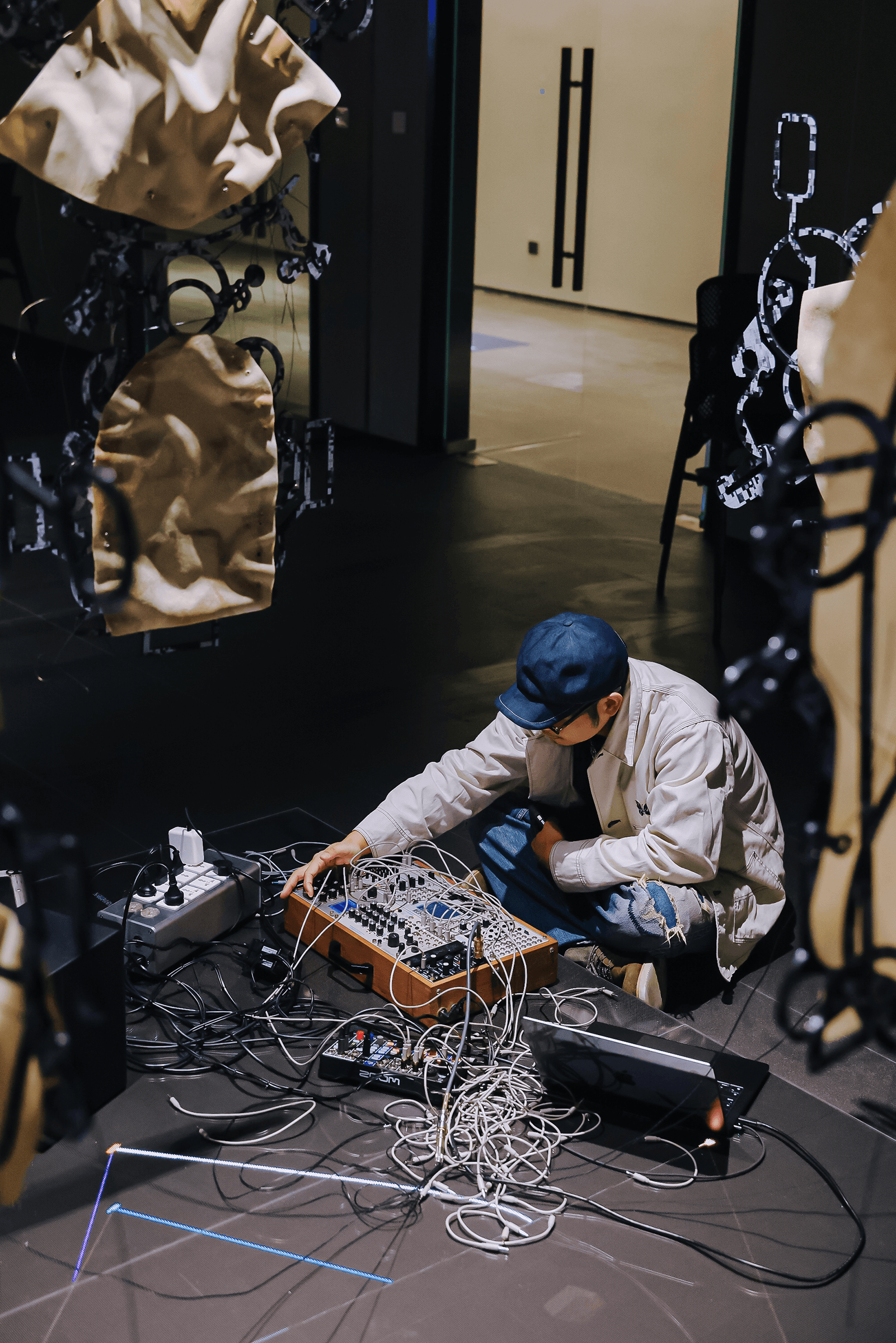
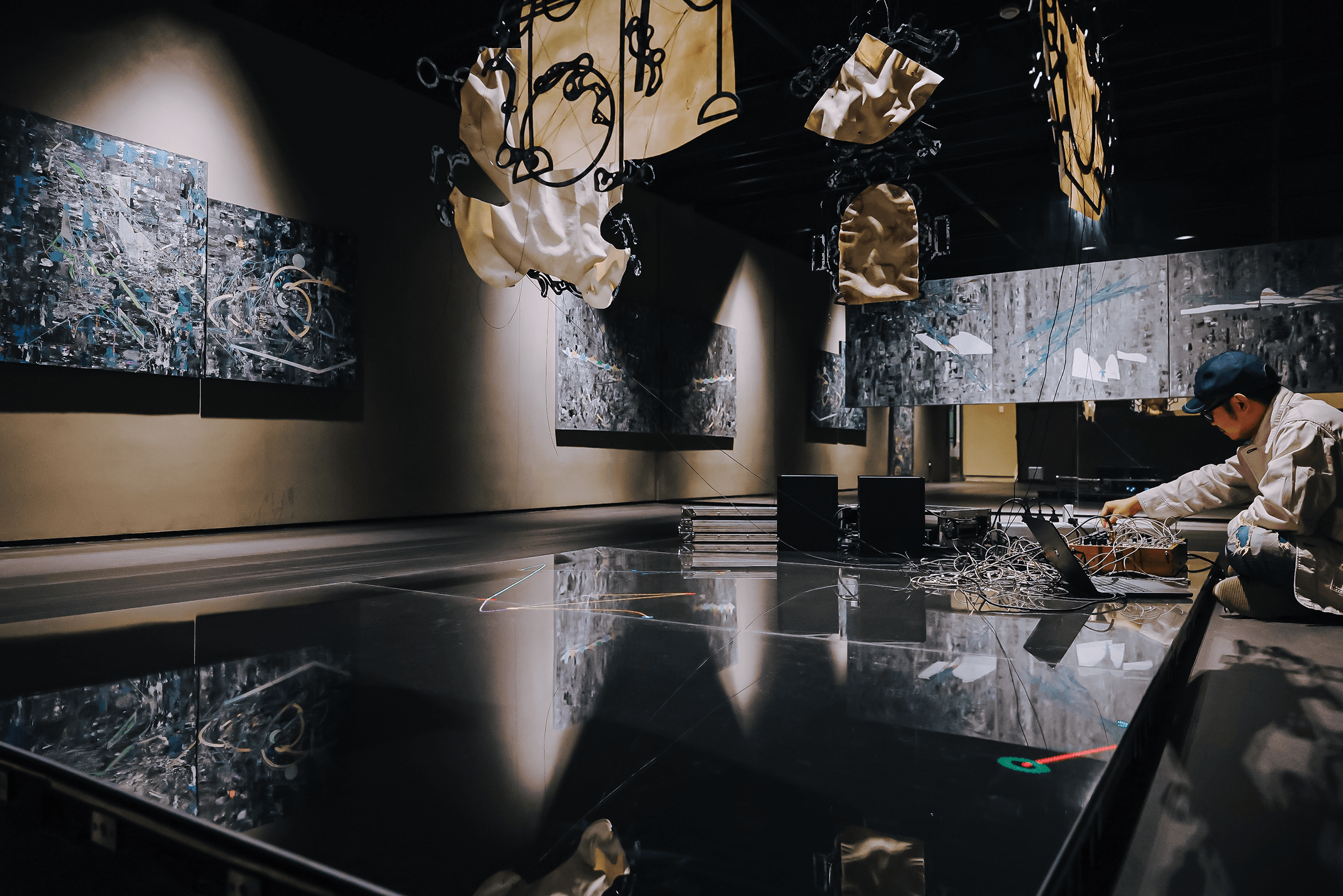
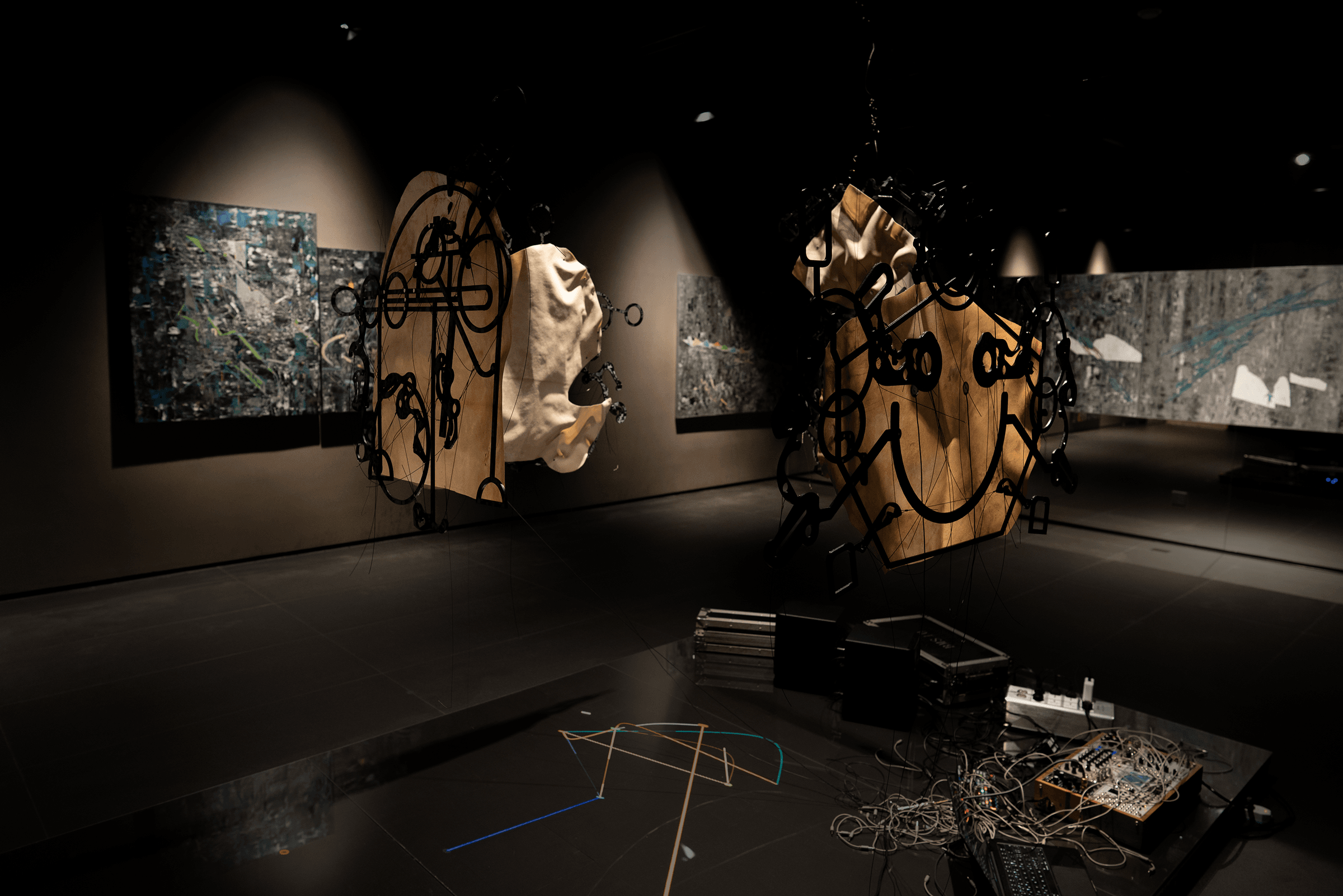
In exhibition versions, Bai adds shamanic drums to the same software system as a live input. The drum surfaces combine cowhide with CNC-cut aluminium symbol structures. Visitors’ strikes are captured through contact microphones and fed into the program, driving the image on screen in real time. At the same time, the sounds are recorded, stored, and later returned to the space at random. A sound heard in the present may therefore come from another visitor’s earlier action, creating shifting relations between a current strike, the changing image, and a sound from the past. The drums are not a separate mechanism from the paintings, but another source of sound and participation within the same system of translation once it enters the exhibition space.
Through repeated translation and manual accumulation, the paintings gradually develop structures resembling PCB traces. The resemblance is not a direct depiction of circuit boards; it emerges through the interaction of software, materials, and manual choice, while also resonating with the electronics manufacturing and circuitry familiar from Bai’s long experience of Shenzhen. Regional experience does not become a thematic label here; it enters through material sensibility, structure, and habits of judgement.
Denoise uses the same software to work with sound in different situations. In the studio, everyday sounds are translated into images that are then selected, altered, and manually layered into paintings. In the exhibition space, visitors’ strikes on the shamanic drums drive the image in real time, while recording, waiting, and random replay return earlier sounds to the room. The program is not an endpoint but an intermediate structure through which bodily perception, sound, image, labour, and live action move into one another. The work retains the displacement, covering, delay, and residue produced by these translations, allowing experience to keep changing across media and time.
/OVERVIEW
《去噪》源于听力变化与持续耳鸣。柏志威以个人听力检测图为程序结构,在工作室中将持续收集的日常声音输入自编程序,使声音实时生成线条、波形与图表;他再从这些结果中选择、截取、重组,并通过逐日手绘层层叠加到画布上。展览版本沿用同一套程序,但增加萨满鼓作为现场声音输入:观众敲击鼓面,鼓声实时驱动画面,同时被记录、储存并在之后随机回放,使现场的身体动作以不同时间重新进入空间。作品关注的不是“消除噪声”,而是声音经验在程序、绘画、装置与人的判断之间如何不断改变。
/FULL_PROJECT_TEXT
《去噪》始于听力下降、持续耳鸣与听力检测的身体经验。检测图第一次把原本只能由身体感受到的听觉变化转化为频率、阈值和曲线。柏志威没有把这套图表当作医学结论,而是把它作为一种外部结构:一个私人感受如何开始进入可以记录、比较和重新制作的形式。
在长期与耳鸣共处的过程中,冥想和向内聆听逐渐进入他的日常。听力检测图也从医学记录转化为一种工作结构。柏志威持续收集日常声音,将它们输入以个人听力检测图为基础的自编程序。声音实时驱动画面,生成不断变化的线条、波形与图表;艺术家再从中选择、截取、重组,并通过长期、逐日的手工绘制层层叠加到画布上。绘画不是程序输出的直接复制,而是人的判断重新进入转译过程:保留什么、覆盖什么、如何叠加以及在哪里停止,都由身体和时间重新决定。
在展览版本中,柏志威在同一套程序上增加了萨满鼓装置作为现场输入。鼓面由牛皮与CNC加工的铝制符号结构组成;观众敲击产生的真实鼓声经接触式麦克风进入程序,实时驱动屏幕上的画面。与此同时,声音被系统记录、储存,并在之后随机返回空间。此刻听见的一次鼓声,可能来自此前另一位观众的动作,使当下的敲击、画面变化与过去声音之间形成不断变化的关系。萨满鼓不是独立于绘画的另一套机制,而是同一转换系统进入现场之后出现的另一种声音来源与参与方式。
在反复转译和手绘累积中,画面逐渐出现近似PCB走线的结构。这种相似并非对电路板的直接描摹,而是在材料、程序和手的选择中自然形成,也与柏志威长期生活于深圳所接触的电子制造和线路视觉经验发生联系。地域经验在这里不是主题标签,而以材料感、结构和判断习惯进入作品。
《去噪》使用同一套程序处理不同情境中的声音:在工作室里,日常声音被转换为图像,并经过艺术家的选择、修改和手工叠加进入绘画;在展览现场,观众敲击萨满鼓产生的声音实时驱动画面,并通过记录、等待和随机回放重新进入空间。程序并不是终点,而是让身体感知、声音、图像、劳动与现场行为彼此转换的中间结构。作品保留这些转换中出现的偏移、覆盖、延迟与残留,使经验在不同媒介和时间中持续改变。